
A table that looks solid can still wobble once it meets a real dining room floor. For wholesale buyers, the issue is rarely one dramatic defect. It usually comes from small mismatches among the base, top, floor, glides, and assembly process.
A heavy base can still move
Weight helps stability, but weight alone does not control every force on a restaurant table. A narrow footprint, uneven tile, loose fasteners, or a top that overhangs too far can make a heavy base feel unreliable during service.
A practical stability check starts with the full table system rather than the base in isolation. The base shape, column height, top size, floor contact points, and mounting plate all decide how the table behaves when guests lean, servers clean, or chairs bump the edge.
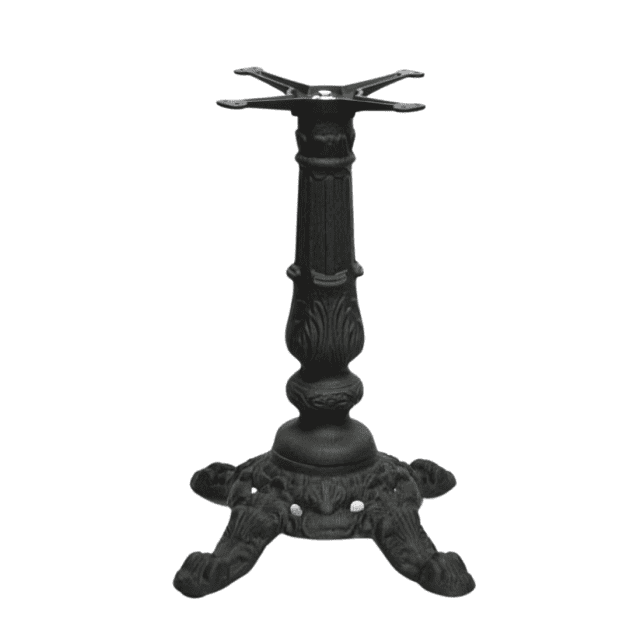
When buyers need a stable commercial program rather than a one-off replacement, Fly Goat restaurant-grade table bases give them a way to compare cast iron and steel options against the same venue requirements.
The stability chain behind a quiet table
A quiet table usually comes from a complete stability chain. Each link must suit the others, because a strong base can only perform well when the top and floor contact points support it correctly.
Footprint and table top size
Footprint is the first visible clue. OM224 can support 24 by 24 inch up to 30 by 30 inch square tops, while OM264 extends the suitable range to 36 by 36 inch and 30 by 48 inch tops. OM324 uses a 4 inch round column and fits a 48 inch round table top.
Longer rectangular tops need support near both ends. OM222 is specified for use in pairs under 30 by 48, 30 by 60, and 30 by 72 inch tops, while the B522 T base supports 30 by 42 through 30 by 72 inch rectangular tops.
For venues that already search around heavy duty restaurant table bases for dining rooms, the better question is whether the base footprint matches the actual top shape and daily use.
| Stability factor | What to confirm | Why it matters |
| Top size | Match round, square, or rectangular top to the listed base range | Excess overhang increases tipping and rocking forces |
| Floor contact | Check glides and contact points after installation | Uneven floors transfer movement into the table |
| Mounting | Tighten plate fasteners and keep the top centered | Loose or off-center tops magnify wobble |
| Service height | Separate dining and bar-height requirements | Higher columns can increase leverage at the edge |
Level glides and floor contact
Level glides are small parts with large consequences. STB steel bases include 1.5 inch round level glides on cross bases, which help the installer compensate for small floor changes and reduce rocking at the feet.
Glides cannot fix every specification problem. They help only after the buyer has chosen the right base size, column height, and top connection for the table that will actually be used.
Floor conditions also change after opening. Tile grout settles, outdoor patios slope for drainage, and cleaning teams may move tables without returning each glide to its previous setting.
A wholesale specification should therefore describe the adjustment point, not only the base model. That small record helps a later maintenance team restore the approved setup instead of guessing by sight.

Material and construction affect failure mode
Cast iron and steel table bases solve stability in different ways. Cast iron offers mass and familiar commercial weight, while steel bases can reduce breakage risk and provide powder-coated black finishes for indoor and outdoor use when the finish is suitable.
STB steel bases are described with a three-screw assembly design that helps prevent loosening during use. That detail matters because repeated wobble often starts after installation, not on the first day a sample table is assembled.
Buyers should keep material and finish decisions tied to the actual dining zone. Chrome, black powder coating, and gray powder coating do not carry the same indoor or outdoor assumptions across every model.
- Confirm whether the finish is for indoor use, outdoor use, or both.
- Check whether bar height is available for the exact model.
- Ask whether the top plate may vary by table top.
- Keep replacement glides and assembly hardware tied to the model record.
Small checks that prevent repeat wobble
Repeat wobble usually means the first correction addressed the symptom rather than the cause. A useful maintenance routine checks the top screws, level glides, floor contact, and base-to-top fit before replacing the whole table.
For multi-location buyers, table bases maintenance for busy restaurants also protects consistency because each venue can inspect the same points in the same order.
A receiving checklist should include a quick assembled-table test. Staff can press at several edges, rotate the table, and confirm that the table returns to stillness without a repeated rocking motion.
Summary for wholesale stability decisions
A heavy-looking base is only one part of a stable restaurant table. Buyers reduce wobble by matching the base footprint to the top, separating dining and bar-height uses, verifying glides, and keeping assembly checks in the receiving routine.
If your project includes mixed floor surfaces, long rectangular tops, or repeat replacements, confirm the right base setup with us before standardizing the order.
FAQ
Why does a heavy restaurant table still wobble
A heavy table can wobble when the base footprint is too small, the top is off center, the fasteners loosen, or the floor contact points do not sit evenly.
Do adjustable glides solve restaurant table wobble
Adjustable glides help with small floor differences, but they cannot correct the wrong base size, poor top mounting, or a table top that overhangs too far.
Are steel table bases more stable than cast iron bases
Steel and cast iron bases can both be stable when specified correctly. The better choice depends on footprint, finish, breakage concerns, application, and the top size.
How often should restaurants check table bases
Busy restaurants should check glides, screws, and top alignment during routine maintenance, especially after floor cleaning, layout changes, or table relocation.
What should buyers confirm before bulk ordering bases
Buyers should confirm top size, base shape, height, finish, top plate, glide details, assembly hardware, and whether the model suits the venue layout.