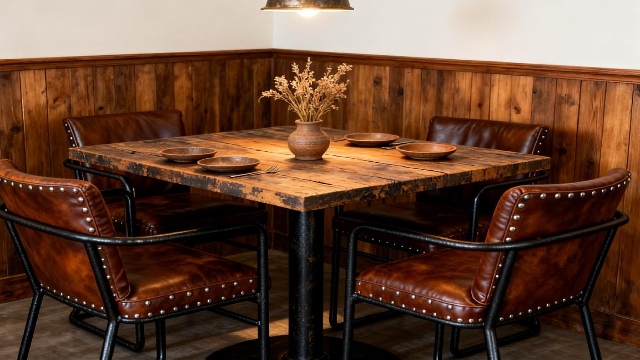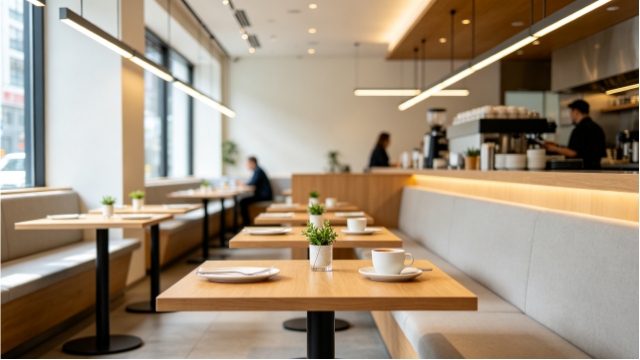
Restaurant tables fail as a system, not as isolated parts. A beautiful top can wobble on the wrong base, while a strong base can look wrong or feel cramped under the wrong top. Wholesale buyers need a practical way to plan table tops and bases together so dining rooms feel stable, coordinated, and easy to replenish.
A Table System Starts With the Dining Layout
Commercial table tops and bases should be planned around how guests sit, how servers move, and how often the furniture will be reset. The same table size can behave differently in a booth row, an open dining room, a bar-height zone, or an outdoor patio.
A wholesale program should define every table position before matching products. The buyer can then separate compact two-top needs from long rectangular group tables, cafe-height tables, and bar-height seating. This keeps the order practical instead of turning the furniture list into a collection of attractive but mismatched pieces.
Layout information to collect
- Tabletop shape, size, thickness, and material.
- Dining height or bar height by area.
- Seating count and chair clearance around each table.
- Indoor, outdoor, cafe, bar, restaurant, or hospitality setting.
- Replacement strategy for future locations or repeat orders.

Birch Tops Need the Right Base Match
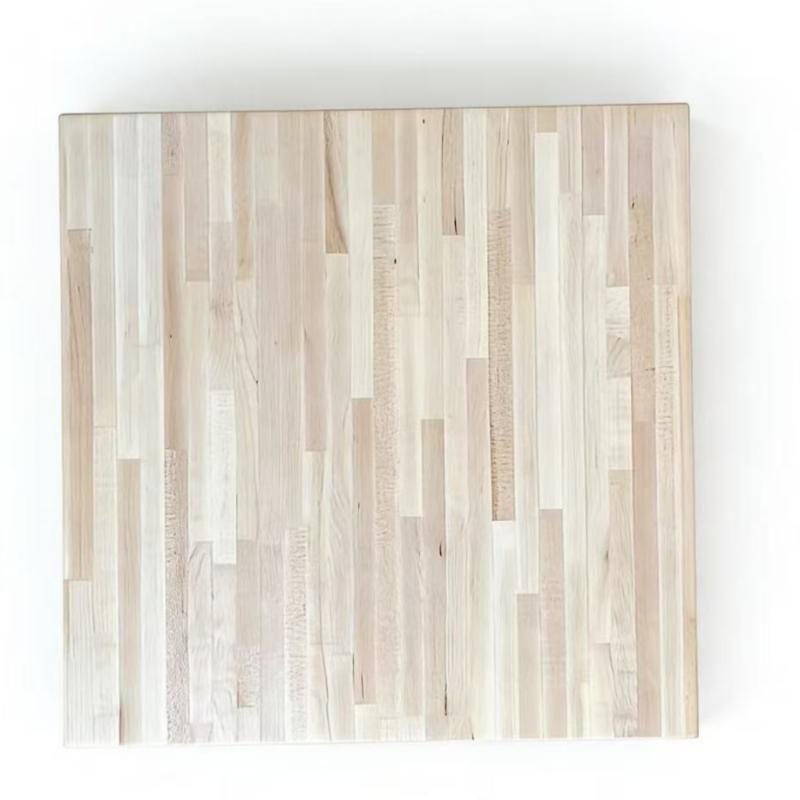
Fly Goat table tops are birch wood tops that can be customized for restaurant projects. Birch gives buyers a warm commercial surface, but the base still has to fit the top size, mounting method, and floor condition. Treating the top and base as one specification reduces wobble, uneven installation, and late-stage substitution.
A program that includes restaurant furniture table tops should pair each top with a confirmed base footprint. Round and square tops often work with round, cross, or prong bases, while long rectangular tops may need T bases or paired supports. If the top thickness changes, the buyer should reconfirm finished table height before production.
The top decision should also include how the restaurant will clean and move the table. A surface that looks right in a sample room may face heavier wiping, stacked chairs, wet floors, and frequent repositioning after opening. When buyers discuss those details before production, the selected top and base can support the actual service rhythm instead of only the drawing.
Guest comfort is the useful test for base geometry. A base that technically supports the top can still feel wrong if feet block chairs, columns sit too close to knees, or a booth table cannot be entered comfortably. For wholesale projects, the best approval sample is not only stable on the floor; it also allows real seating and service movement around it.
This record discipline also supports future design changes. If a new location needs a darker finish, different chair spacing, or more outdoor seating, the buyer can adjust one part of the table system while preserving the approved dimensions that already worked.
Common pairing logic
| Top format | Base direction | Wholesale check |
| Small square or round top | Round, cross, or prong base | Confirm diameter or cross footprint |
| Medium rectangular top | Cross base or T base | Check leg clearance and top plate position |
| Long rectangular top | Paired T bases or double T base | Specify quantity and spacing per table |
| Outdoor table | Black powder-coated steel option where suitable | Keep chrome and outdoor-use finishes separate |
| Bar-height table | Base family with 40 inch height option | Confirm final height with top thickness |
Base Geometry Protects Guest Comfort
A stable table still has to be comfortable. Cross and prong bases can provide strong support, but their feet may affect guest foot space if the table is narrow or the seating is tight. T bases can work well for rectangular booth tables because the support sits closer to the ends rather than under every chair position.
Fly Goat base references give buyers model-level guardrails. OM222 T bases can be used in pairs for longer rectangular tops, B17R and B22R round bases fit common compact table sizes, and B3030 cross bases can support larger square or round tops. These model examples help purchasing teams avoid treating all restaurant tables and bases as interchangeable.
Wholesale Consistency Matters After Opening
Wholesale Fly Goat restaurant tables and bases programs should also consider replenishment. Restaurants often reorder after a new location opens, after a remodel, or when a damaged top needs replacement. If the first order records only general descriptions, the second order may not match the original height, finish, or base footprint.
Fly Goat serves restaurant, cafe, bar, hotel, and hospitality buyers with table bases, table tops, and chairs, supported by a supply chain built around iron components, cast iron, stamped steel bases, and customized birch tops. For buyers ordering two or three containers at a time, the value is in repeatable product records as much as in the first shipment.
Records to keep with each table set
- Top size, edge, finish, and thickness.
- Base model, finish, height, and column size.
- Top-plate or mounting detail used for approval.
- Room area, seating count, and replacement priority.
- Photo record of the approved complete sample.
A complete table record also protects the buyer when several locations are being furnished in stages. The first location may approve a birch top with a black steel base, while the next location may need the same visual language with a different floor condition or table spacing. Clear records let the team adjust the base choice without losing the approved appearance.
This is especially useful for restaurant groups that reorder after seeing how guests use the space. A buyer can keep successful table sets intact, change only the weak point, and avoid starting the sourcing process over for every remodel.
A Practical Summary for Complete Table Planning
The best table program treats the top, base, chair clearance, floor condition, and future reorder path as one decision. Buyers who plan the system early reduce field fixes and make container orders easier to repeat across restaurants, cafes, and hospitality spaces.
For coordinated table-top and base planning, contact us with your layout, table sizes, and order quantity.
FAQ
Should buyers choose table tops or bases first?
Buyers should define the dining layout and tabletop sizes first, then choose bases that support those tops while preserving guest clearance and finished height.
Are birch table tops suitable for restaurants?
Birch table tops can be suitable for restaurant projects when the finish, edge detail, base match, cleaning routine, and replacement plan are specified for commercial use.
What base works best for long restaurant tables?
Long rectangular tables often need paired T bases or a double T-base solution. The exact choice should follow the top length, width, weight, and seating layout.
Can one order include table tops, bases, and chairs?
A coordinated wholesale order can include table tops, bases, and chairs when the buyer records the table set as a complete dining system rather than separate product lines.
What causes table-top and base mismatch?
Mismatch usually comes from incomplete size records, unclear mounting details, wrong base count for long tops, finish confusion, or changes in top thickness that alter finished height.