Introduction
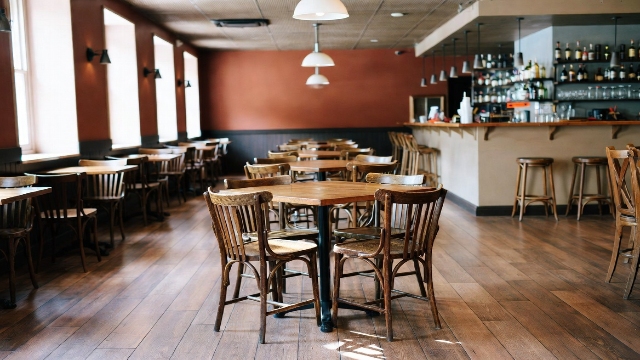
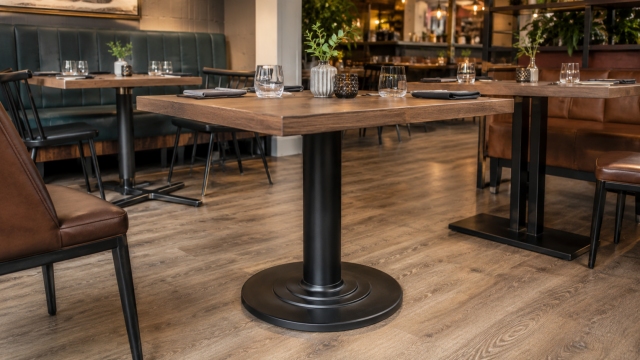
In restaurant and café projects, most attention goes to tabletops and seating, while the base is often treated as a minor component. In reality, the table base is the structural foundation that determines stability, safety, and long-term service performance. In busy dining environments, its impact is direct and continuous in daily operations.
Why Table Stability Starts from the Base Structure
The dining atmosphere revolves around movement, whereby guests lean on tables, servers move trays, and constant cleaning activities take place. The structure of control in such an atmosphere begins with the dining table’s base. If the base is weak or poorly matched to the tabletop, instability appears immediately as wobbling or uneven load distribution.
In commercial use, even a small level of movement can affect customer perception. A slightly unstable table reduces perceived quality of the space and increases service interruptions. In high-turnover restaurants, this translates into repeated adjustments, complaints, and a higher maintenance workload.
At Fly Goat, we see that most stability issues do not come from the tabletop itself, but from improper base selection or insufficient structural footprint .
Load Distribution and Safety Risks in Commercial Spaces
Commercial dining areas operate under a constant dynamic load rather than a static load. This includes elbows on edges, shifting plates, and uneven floor surfaces. A properly engineered restaurant table bases system distributes these forces evenly into the floor.
The most critical risk is tipping. A narrow or lightweight base paired with a large tabletop increases leverage, making tipping more likely when force is applied to one side. This is especially important in bar environments and fast-turnover dining layouts.
Another overlooked factor is edge loading. When customers sit asymmetrically or lean heavily on one side, torque pressure increases rapidly. A stable base reduces this risk by widening the support footprint and increasing counterbalance weight.
Material Selection and Structural Durability
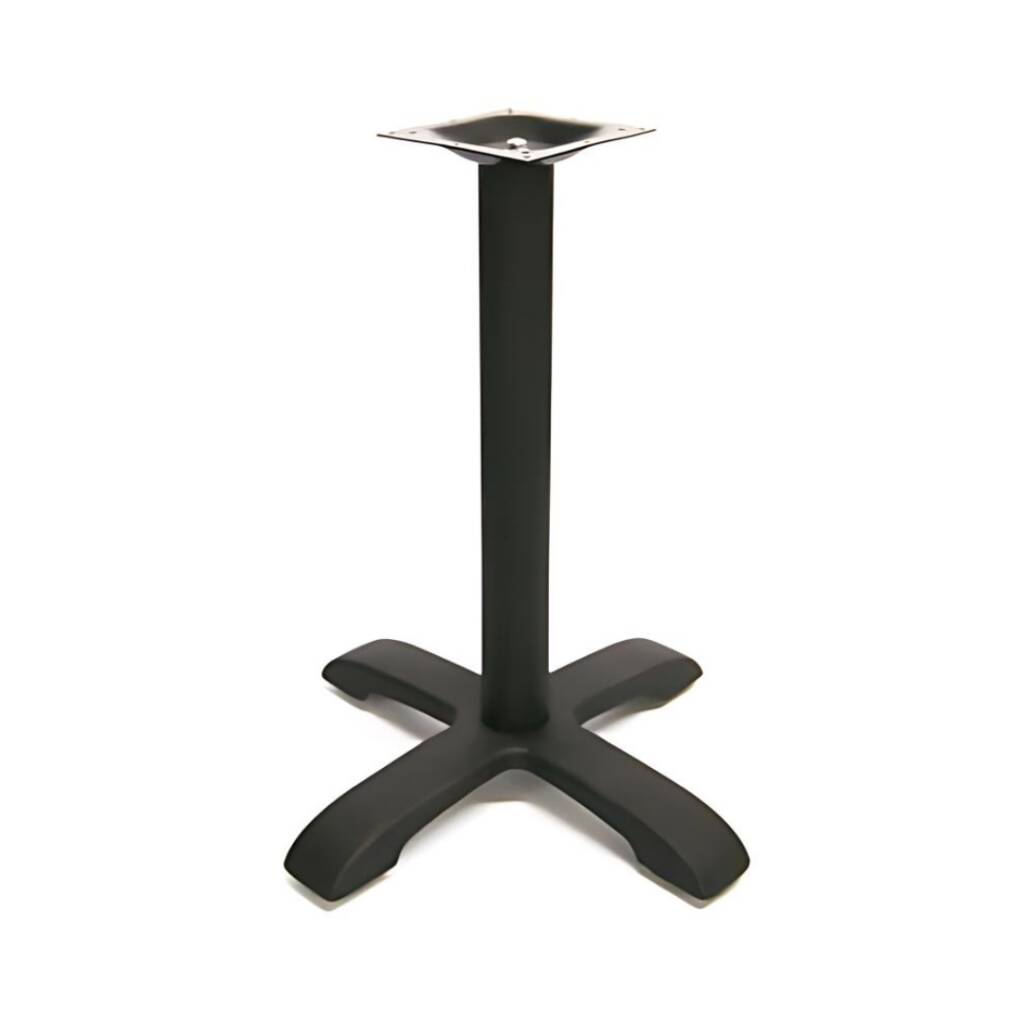
In commercial furniture supply, material choice directly impacts lifecycle cost. Based on our factory production system in Suzhou and export experience across North America and Europe, we primarily use cast iron and steel for commercial table bases due to their strength and deformation resistance .
Cast iron provides high static stability due to its weight, while steel structures offer better flexibility in assembly and coating options. For outdoor or mixed-use environments, powder-coated steel improves corrosion resistance and reduces surface maintenance needs.
The following comparison summarizes key structural differences:
| Base Type | Material | Stability Level | Best Use Scenario | Maintenance Requirement |
| Round Base | Cast iron / steel | High | Small round tables, cafés | Low |
| Cross Base | Steel / cast iron | High | Square tabletops, restaurants | Low |
| T Base | Steel / cast iron | Very high | Long rectangular tables | Low |
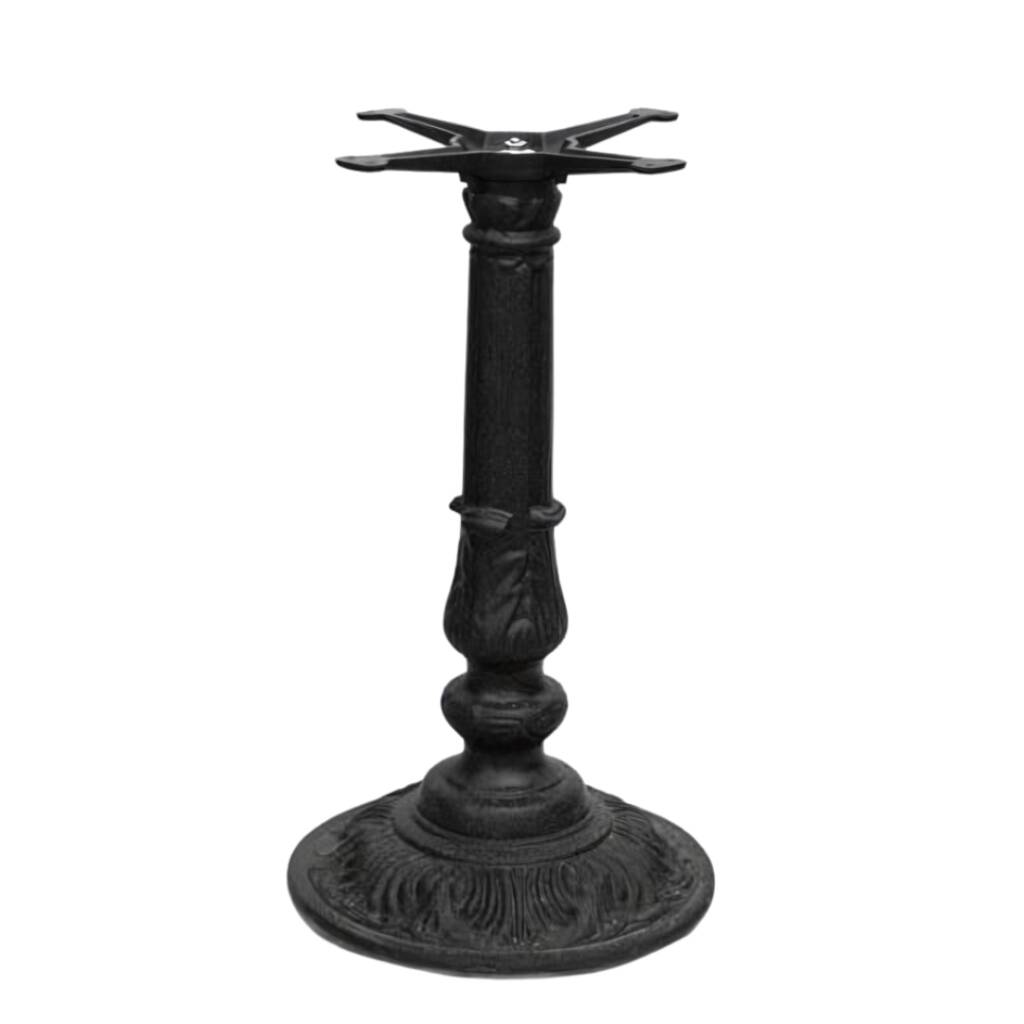
| Ornamental Base | Cast iron | Medium–High | Premium dining spaces | Medium |
| Bolt-down Base | Steel | Very high | Fixed installations, outdoor | Very low |
Each structure supports different load behavior. Selecting the correct configuration is more important than choosing a decorative design.
Installation Efficiency and Operational Cost Control
In multi-location restaurant chains or wholesale distribution projects, installation speed directly affects opening schedules. A poorly designed base increases on-site labor time, especially when alignment and leveling are required.
Modern restaurant table bases systems from our production line are designed with simplified assembly structures, including multi-screw locking and pre-aligned top plates. This reduces installation errors and ensures consistent assembly quality across multiple units.
Leveling is another operational factor often ignored in early procurement. Uneven flooring is common in real restaurant environments. Adjustable glides help correct height differences and prevent rocking without additional shimming work.
For bulk orders, reducing installation time per table by even a few minutes significantly reduces total labor cost across hundreds of units.
Customer Experience and Perceived Quality
From a customer perspective, the table is not seen as separate components. The experience is judged as a single system. A stable dining table base improves perceived quality even if customers cannot identify the technical reason.
Wobbling tables create subconscious discomfort. It affects dining duration, drink stability, and even willingness to reorder. In bar environments, this issue becomes more critical due to glassware sensitivity.
A stable table also supports better space utilization. Operators can reduce spacing between tables without increasing risk of interference, improving seating capacity per square meter.
Long-Term Maintenance and Replacement Cost
One of the most overlooked procurement factors is lifecycle cost. A weak base may still function initially but leads to frequent repairs, replacement parts, or full unit replacement within a short period.
Heavy-duty commercial table bases significantly reduce maintenance cycles. Powder-coated finishes protect against scratches and corrosion, while cast iron cores maintain structural integrity even under long-term load stress.
Maintenance in commercial environments typically includes:
- Floor contact wear replacement (glides)
- Surface cleaning and coating preservation
- Tightening of connection points after extended use
A well-designed base reduces the frequency of all three.
Structural Matching with Tabletop Materials
At Fly Goat, we often supply table systems using birch tabletops combined with metal bases. Birch provides a balanced surface density suitable for commercial use, but it still requires a properly matched base to maintain flatness under load.
Incorrect pairing can lead to long-term deformation at connection points. This is not immediate but appears after repeated stress cycles in busy restaurants.
Proper matching between tabletop size and base footprint ensures uniform load distribution. For example, larger rectangular tabletops require cross or double T structures instead of single-column designs.
Bulk Procurement Considerations for Wholesalers
For wholesalers and distributors, restaurant table bases are not individual products but part of a repeat supply system.
Key procurement considerations include:
- Standardized mounting plate dimensions for mixed tabletop supply
- Stackable or space-efficient packaging for container loading
- Coating consistency across batches for visual uniformity
- Replacement part availability for long-term supply continuity
Supply chain stability becomes part of product value, especially in repeat purchasing markets.
Risk Control in Commercial Dining Environments
Risk in restaurant furniture is not only structural failure. It includes liability exposure from customer injury, operational downtime, and brand perception loss.
A stable base reduces:
- Table tipping incidents
- Spill-related accidents
- Service interruptions caused by unstable furniture
In high-density dining layouts, these risks multiply quickly. Proper base selection is therefore part of operational risk management, not just furniture selection.
Conclusion
Commercial furniture performance is defined by structure, not appearance. The table base is the hidden component that determines safety, stability, and long-term operational cost in real dining environments.
At Fly Goat, we design and supply commercial table bases, restaurant table bases, and integrated systems that support high-frequency commercial use with consistent structural performance. Our focus remains on durability, assembly efficiency, and scalable supply for wholesale partners across global markets.
For bulk procurement, technical consultation, or quotation support, project teams can submit specifications or request a full catalog review through our commercial inquiry channel to streamline selection and pricing decisions.
FAQ
What affects the price of commercial table bases most?
Material type, structural design, surface coating, and order volume are the main cost drivers. Cast iron and reinforced steel designs typically increase unit cost but reduce long-term replacement frequency.
Can restaurant table bases be used for outdoor dining areas?
Yes, but only powder-coated steel or treated cast iron models are suitable. Moisture resistance and corrosion protection are essential for outdoor environments.
How do I choose the correct dining table base size?
The base footprint must match the tabletop dimensions and weight. Larger tabletops require wider cross or multi-prong bases to ensure load balance and prevent tipping.
Do table bases require regular maintenance?
Minimal maintenance is required, mainly checking leveling glides and tightening connection points after extended use. High-quality coatings reduce surface maintenance needs.
Can bulk orders maintain consistent quality across shipments?
Yes. Standardized production systems ensure uniform material, coating, and structural specifications across container-level shipments, supporting long-term procurement consistency.