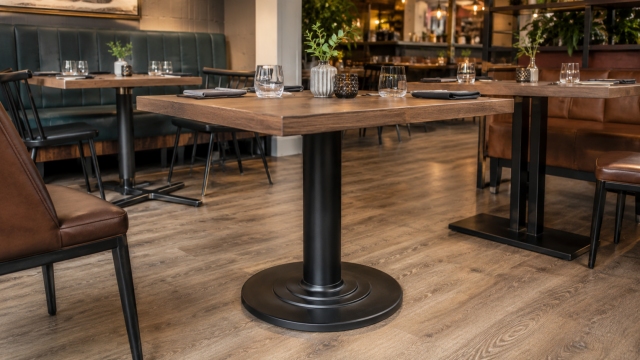
A black frame gives a seating order visual consistency, but the seat option determines how well that order fits the venue. Wholesale buyers should specify more than a color: they need to separate the standard cushion, custom upholstery, and wood-seat paths, then lock the sample and evidence required before production. This guide turns that choice into a practical M5530 brief without borrowing claims from unrelated chair models.
Fix the Application Before the Seat Finish
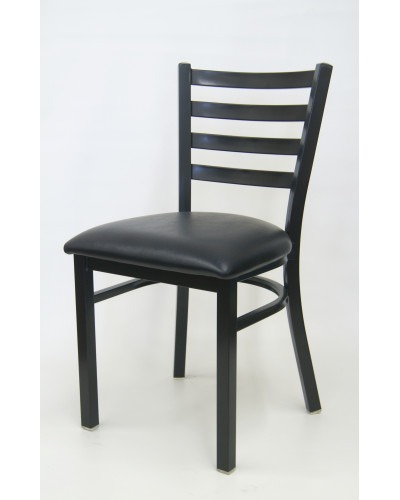
Application is the first boundary because M5530 is an indoor chair. The model uses a black metal frame with black powder coating and comes with an original black cushion. That evidence supports restaurant and cafe dining-room use; it does not support an outdoor, patio, stacking, or weather-resistance claim. Buyers should therefore state the indoor zone and cleaning routine before discussing a new seat surface.
That boundary is especially useful for buyers comparing indoor restaurant metal chairs, because a familiar black finish does not make different models equivalent.
A focused brief also prevents a generic category request from replacing a model-level decision. The broader range of commercial metal chairs may contain different frames, finishes, or operating limits, so the M5530 order should carry its own approved configuration.
Map the chair to the dining program
The dining program should explain why the seat is changing. A standard black cushion supports a uniform black scheme, custom upholstery can carry a defined color or material reference, and a wood seat creates a different visual and maintenance profile. These are separate choices, not interchangeable descriptions of one finished chair.
Define the buyer’s non-negotiables
A concise internal brief should name the conditions that will decide approval:
- indoor restaurant or cafe zone and expected cleaning method;
- standard cushion, custom upholstery, or wood-seat path;
- approved color, texture, edge appearance, and visible stitching reference;
- required sample, test evidence, and receiving inspection method.
Compare the Three Supported Seat Paths
The seat path should be selected by operating need rather than by a vague preference for black metal restaurant chairs. M5530 supports the original black cushion, a custom upholstery seat, or a wood seat, while other details still require supplier confirmation.
| Seat path | Best use in the brief | Buyer must define | Approval evidence |
| Original black cushion | Consistent black seating program | Cleaning method and acceptable finish variation | Complete finished sample |
| Custom upholstery | Specified color, texture, or venue identity | Material reference, color standard, seam details, care target | Approved upholstery plus complete chair sample |
| Wood seat | Hard-surface look and a distinct care routine | Wood species, finish, color, edge profile | Finished wood seat installed on the chair |
Turn Custom Upholstery Into a Quotation-Ready Brief
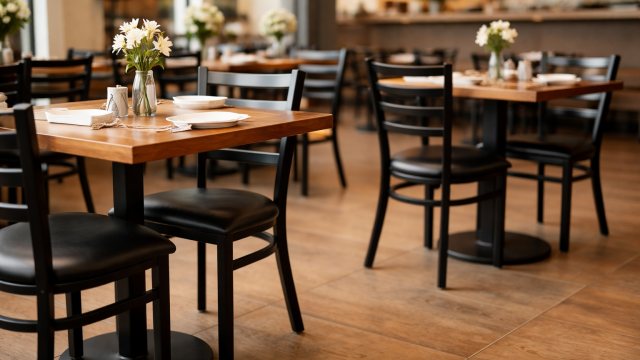
Custom upholstery becomes manageable when the request is tied to a physical reference and acceptance rules. A buyer should not rely on a color name such as charcoal or burgundy alone, because names do not define hue, grain, gloss, or batch tolerance. Once the venue need is clear, Fly Capra can review the M5530 seat path against the buyer’s reference package.
Lock material identity and appearance
The appearance package should identify the upholstery supplier or reference code when available, the face color, texture direction, seam placement, and acceptable edge treatment. If the material comes from the buyer, the brief should also state what quantity or sample size will be supplied for evaluation. Unsupported performance values should remain open confirmation fields rather than invented requirements.
Ask for evidence that matches the market
The evidence request should name the destination market and intended use before naming a standard. For European non-domestic seating projects, EN 16139:2025 is a current reference covering safety, strength, and durability requirements and test methods for adult non-domestic seating. Mentioning that standard does not mean M5530 is certified or compliant; buyers should request model- and configuration-specific evidence when the project requires it.
Approve a Complete Sample, Not a Loose Swatch
A loose swatch confirms only part of the decision. The production reference should be a complete chair that combines the M5530 frame, selected seat construction, upholstery or wood finish, visible seams, attachment method, and overall appearance. This approach lets the buyer evaluate the junctions that disappear when components are reviewed separately.
A controlled Fly Goat sample also gives the receiving team one physical reference for checking later deliveries.
Sample approval checklist
- Confirm the model name and indoor black powder-coated frame.
- Photograph the approved front, rear, side, underside, and seat details.
- Record the upholstery or wood reference and any approved variation limit.
- List the exact evidence reviewed and any items still pending confirmation.
- Keep one signed or otherwise controlled sample as the production reference.
Keep Receiving Checks Aligned With Approval
Receiving inspection should repeat the approval logic instead of introducing a new standard at the warehouse. Inspectors can verify the M5530 identity, indoor black frame finish, selected seat type, color and texture match, visible seam execution, surface condition, and consistency against the controlled sample. Functional or laboratory tests should be checked only when they were included in the agreed evidence plan.
A short defect-routing rule makes the inspection usable. Cosmetic variation should be compared with the approved limit; configuration errors should be isolated by model and seat path; and missing evidence should be recorded as an open documentation item. The same rule applies across metal frame restaurant chairs, but the acceptance sample and claims must remain model specific.
A Practical Buying Decision
The strongest M5530 order is a controlled seat program, not a broad request for metal chairs for restaurants. Buyers should first confirm indoor use, select one of the three supported seat paths, define appearance and care requirements, approve a complete sample, and request only the market-relevant evidence needed for that configuration. That sequence keeps customization useful without turning unsupported assumptions into purchase specifications.
For a repeat program, keep the Fly Goat model identity and the approved seat path together on every purchase and receiving record.
Send the M5530 quantity, indoor application, chosen seat path, material references, and evidence needs when you contact our team for a configuration review.
Domande frequenti
What seat options are supported for M5530?
M5530 is available with its original black cushion, a custom upholstery seat, or a wood seat. Buyers should treat each as a separate configuration and approve the complete finished chair.
Are M5530 chairs intended for outdoor restaurant seating?
No outdoor claim is supported for this model. The verified configuration is an indoor black metal frame with black powder coating, so patio use requires a different product decision.
What should a custom upholstery brief include?
The brief should identify the material or reference code, color, texture, seam and edge details, cleaning target, complete-sample requirement, and any market-specific evidence requested by the project.
Can a buyer approve upholstery from a swatch alone?
A swatch is useful for material and color review, but it does not show the installed shape, seams, edges, attachment, or interaction with the frame. A complete chair sample is the stronger production reference.
Does citing EN 16139:2025 prove the chair complies?
No. The standard is a relevant non-domestic seating reference, but compliance must be supported by evidence for the exact model and configuration. This article does not claim M5530 certification.