Introduction
In the fast-paced hospitality environments, a restaurant’s setup affects customer satisfaction a great deal. Interior style and lights build the vibe. Meanwhile, the solid build of furniture offers basic support. Table base stability stands out as a key concern in spots with heavy foot traffic. A shaky table does more than irritate slightly. It poses a major risk. This can cause spills, shattered dishes, and hazards to visitors and employees.
Unsteady table bases bring usual issues like regular upkeep needs. They also cut short the furniture’s useful time. In business environments, tables deal with nonstop shifts and intense handling. Every day, home-level bases just won’t cut it. Putting resources into heavy-duty restaurant table bases proves vital for ongoing business operations. As a result, the eating space stays reliable, secure, and effective.
What Makes a Table Base “Heavy-Duty” in Commercial Restaurants?
The difference between a basic base and a heavy-duty commercial base rests in its construction and material standards. Business eating zones call for sturdy table base solutions. These must handle hundreds of pounds of vertical load and side push every day.
- Load-Bearing Capacity: Heavy-duty bases hold up heavy table top surfaces, like real wood or dense stone. They avoid bending or slanting.
- Material Thickness: Unlike low-cost picks,heavy-duty restaurant table bases use sturdier steel or solid cast iron. This helps avoid breakdown in the framework.
- Structural Design: Elements such as stronger top plates and broader column sizes keep the joint between the base and table top firm. This holds true across many years of use.
Key Causes of Table Instability in High-Traffic Dining Areas
Insufficient Base Weight and Footprint
Light bases mainly cause tables to rock. When a base lacks enough heft, the balance point for the whole piece rises too much. This leaves it open to overturning. The table base width for stability has to match the table’s height and breadth. That provides a steady ground touch.
Mismatch Between Table Base and Table Top Size
Loading tiny bases with oversized tops marks a typical error in restaurant setup. If the top reaches too far past the base’s hold, it forms a lever-like action. For that reason, sticking to a table base size guide and advised size limits is crucial. It preserves evenness.
Floor Conditions and Daily Movement
Even the best restaurant table bases face issues with rough floors. In crowded eateries, surfaces might tilt gently or show gaps in tiles. On top of that, chair dragging and shakes from busy crowds slowly undo standard fitting screws. In turn, this builds unsteadiness.
Choosing the Right Heavy-Duty Table Base for Stability
Material Selection: Cast Iron vs. Steel
Selecting the material marks the initial move toward stable table bases for restaurants. Fly Goat Inc. supplies a wide array of options to fit particular restaurant goals. They center on cast iron and steel mainly.
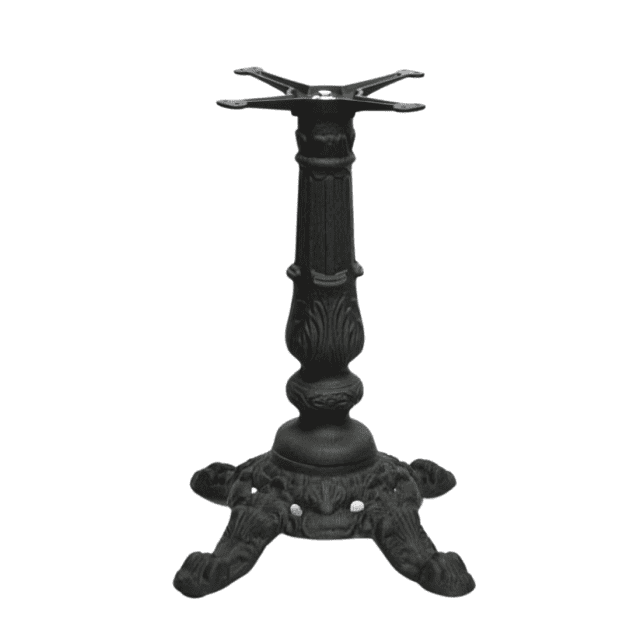
- Cast Iron: It stands out for its full mass and solid stillness. Cast iron serves as a classic pick for tough tasks. Its built-in density drops the table’s balance point.
- Steel: Current steel bases deliver solid power and shatter-proof qualities. Fly Goat Inc.’s steel bases include a three-screw pattern. This avoids slack and eases setup.
- Chrome-Finished Steel: In inside areas needing a smooth, shiny finish, chrome-finished steel combines durability with stylish appeal.
Different Types of Table Bases and Structural Design
Knowing the different types of table bases lets you spread the load in assorted ways. It depends on your chair arrangement.
- T Bases: They work great for straight tables. People often pair them to allow free leg space.
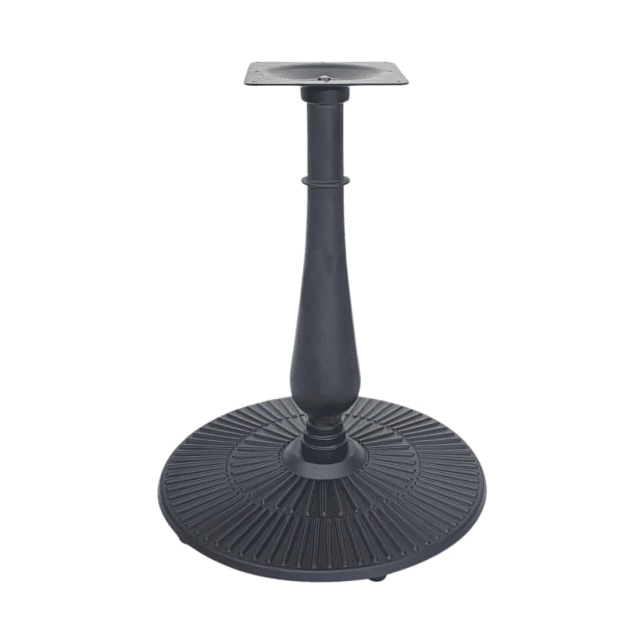
- Round Bases: These bring a timeless style. They ensure even steadiness for circular or box-shaped tops.
- Cross and Prong Bases: Such options prove very flexible. They deliver a fine balance by dividing the weight over four or three separate spots.
Table Base Size Guide for High-Traffic Restaurants
Picking the proper measurements follows a clear method. The column’s width and base’s reach need to expand as the top enlarges. This upholds table base stability.
| Base Model Example | Base Style | Column Diameter | Recommended Table Size |
| OM223 | 3-Prong Cast Iron 21 | 3″ | 24″R – 30″R |
| OM263 | 3-Prong Cast Iron 24 | 3″ | 36″R – 42″R |
| B17R | Round Cast Iron 27 | 3″ | 24″x24″, 30″x30″, 30″R |
| B30R | Round Cast Iron 30 | 4″ | 48″R |
| B3636 | Cross Cast Iron 33 | 4″ | 48″R |
| B4040 | Cross Cast Iron 36 | 4″ | 60″R |
For very large tables, like a 36″x96″ shared table, a double T-base setup is needed. It prevents lateral sway and tipping risk.
Indoor vs. Outdoor Stability Considerations
Outside eating zones bring distinct hurdles. These include breezes and bumpy spots like decks or walkways. Fly Goat Inc. offers powder-coated steel bases made just for outside and combined settings. Such bases have a strong black powder layer. It resists rust well.
To tackle rough ground, plenty of heavy-duty restaurant table bases include adjustable feet. Take cross bases, for example. Some have 1.5″ R-level glides. These enable solid backing and simple adjustment. You skip ugly wedges under the legs.
Preventing Wobble with Proper Installation and Assembly
Steadiness usually hinges on assembly quality. A typical weak link in business furniture is the column-to-plate link. Top stable table bases for restaurants employ beefed-up screw setups. A three-screw method outshines one fat bolt. It stops the column from spinning or leaning as years pass. Good assembly guarantees quick steadiness. It also trims future upkeep expenses. The reason is that pieces avoid grinding away.
Matching Heavy-Duty Table Bases with Commercial Table Tops
A heavy-duty base has to pair with the top’s exact substance. Be it laminate, true wood, or rock, the base’s top plate needs ample size. It shares the top’s load fairly. Unequal pressure might bend the top or yank out fitting screws. When you link a solid base to the fitting top, you secure steady results. This endures the demands of routine business activity.
When to Consider Bolt-Down or Fixed Table Base Solutions
In crowded paths or lasting layout areas, bolt-down bases like the BDB series offer the top fix for stability.
- Safety: Fixed bases resist overturning. This makes them perfect for busy paths.
- Space Management: They block “table creep.” That is when tables drift from place due to patron shifts.
- Applications: You find these often in quick-service spots, coffee houses, and taverns. There, the arrangement maximizes crowd flow.
Why Supplier Experience Matters for Heavy-Duty Table Bases
Selecting a provider holds as much weight as the base choice. Fly Goat Inc. delivers more than 15 years of field knowledge. We run as a complete hub with an ISO 9001 approved setup. Five well-placed storage sites exist. Our strong network stretches from Suzhou to North America and Europe. A seasoned provider confirms goods pass firm quality tests.
Partnering with a trusted group yields beyond mere items. You gain advice for choices, coverage for ease, and a network ready for big batch requests. Waits stay brief.
Conclusion
Achieving steadiness in high-traffic dining areas is a varied task. It kicks off with choosing suitable mass, pattern, and scale for table bases. Through funding heavy-duty restaurant table bases from stuff like cast iron or bolstered steel, plus heeding tight size rules, eatery managers dodge usual shaky gear traps.
In essence, the lasting gain from backing the best restaurant table bases lies in better security, lower fix bills, and boosted patron joy. With steady furniture, diners zero in on essentials: the meal and fellowship.
FAQ
1. How do I know if I need a 3-inch or 4-inch diameter column for my table?
The column diameter is dictated by the size and weight of the table top. Generally, for table tops up to 36 inches, a 3-inch column is sufficient. For larger tops (48 inches to 60 inches), a 4-inch column is necessary to provide the structural rigidity needed to prevent swaying.
2. Can I use the same table bases for both my indoor and outdoor patio?
Yes, provided you choose the right finish. Steel bases with a black powder coating are suitable for both indoor and outdoor use. However, chrome-finished bases should generally be reserved for indoor environments as they are not specifically rated for outdoor durability like powder-coated versions.
3. Why is my table still wobbling even though the base is heavy?
Wobbling on a heavy base is usually caused by either an uneven floor or a loose connection in the assembly. Check if your base has adjustable level glides to compensate for the floor. If the floor is level, inspect the screws connecting the column to the base to ensure they are tightened securely.
4. What is the benefit of a “Bolt-Down” base?
Bolt-down bases are permanently fixed to the floor using bolts. They offer the highest level of stability and safety in extremely high-traffic areas, and they ensure your floor plan remains exactly as intended without tables being moved by customers.
5. How many bases do I need for a very long rectangular table?
For rectangular tables exceeding 48 inches in length (such as 30″x60″ or 30″x72″), you should typically use two T-bases to provide balanced support at both ends of the table top.