Einführung
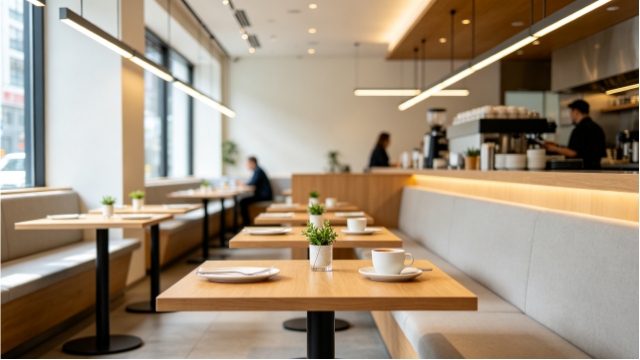
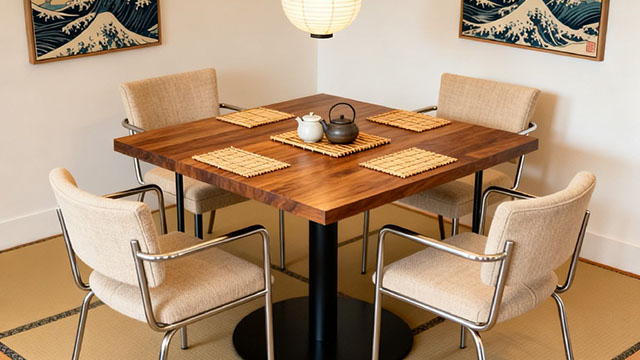
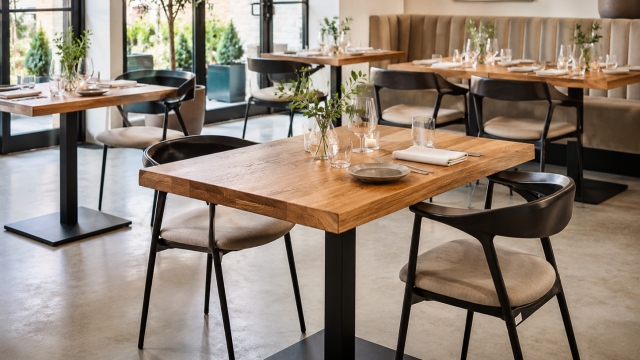
Busy dining spaces need restaurant table bases that stay stable, fit the right tabletop size, and support long daily service. At Fliegen Ziege, we supply commercial furniture for restaurants and cafés, including table tops, chairs, and table bases for restaurants in cast iron, steel, chrome-finished, powder-coated, round, cross, T-base, ornamental, and prong designs. For B2B buyers, the right base affects safety, guest comfort, layout efficiency, and long-term replacement cost.
What Stability Factors Should Buyers Check First?
Restaurant table bases should be chosen by structure before style. A table base must keep the tabletop steady when customers lean on the edge, staff clean the floor, or heavy plates and trays are placed on the table. In a busy restaurant, small stability problems quickly become service problems.
The base footprint is the first point to check. A wider base spreads weight better and lowers tipping risk. This is especially important for square, rectangular, and large round tabletops. A small base may save floor space, but it should not be used under an oversized or heavy tabletop.
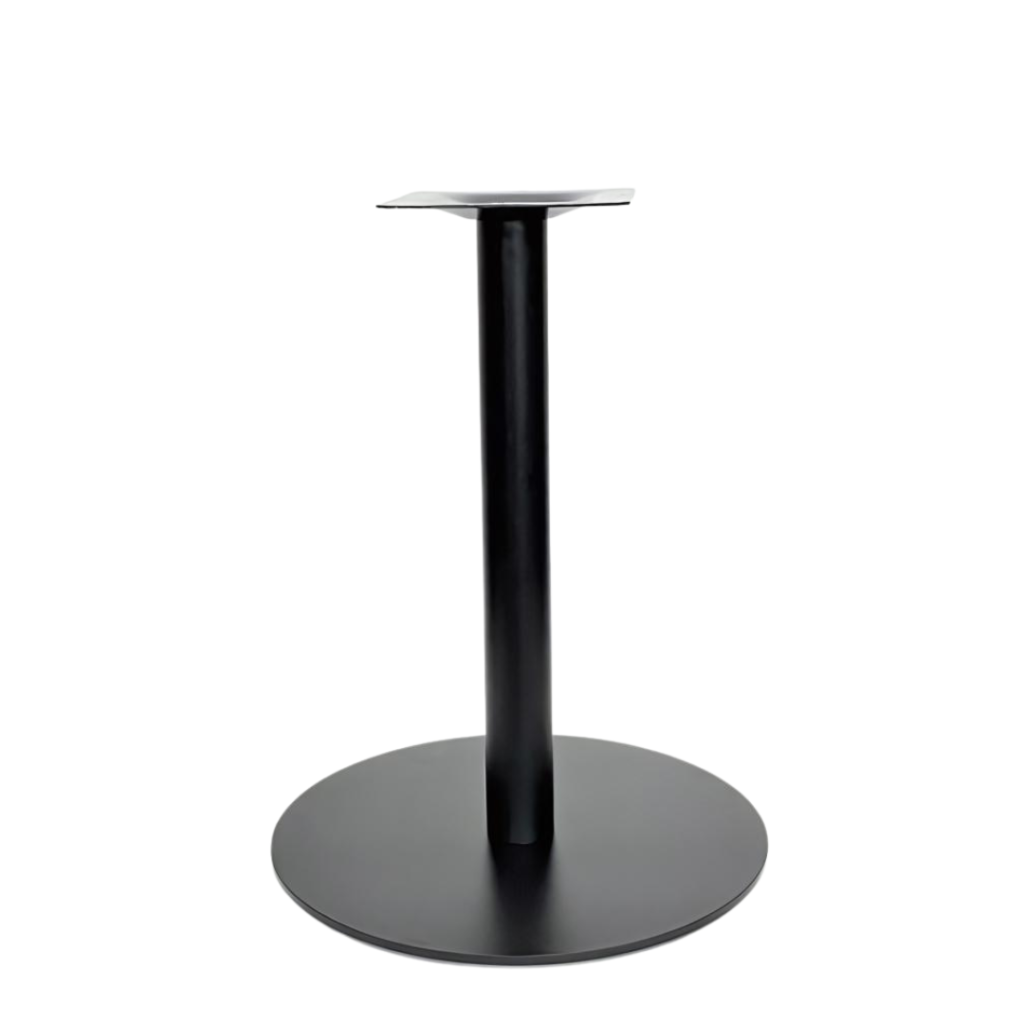
Column size also matters. Many commercial table bases use a 3-inch round column, while larger bases may need a stronger 4-inch column. Buyers should also confirm standard dining height or bar height before ordering. The wrong height affects both comfort and safety.
The top plate should match the tabletop size and fastening method. A weak or mismatched top plate can cause loosening after repeated use. Adjustable level glides are also useful because restaurant floors are often uneven. They help reduce wobbling without temporary fixes.
How Should Buyers Match Tabletop Size with Commercial Table Bases?
The tabletop size should decide the base model. Kommerzielle Tischbasis must match the tabletop shape, restaurant layout, and daily use frequency. A base that is too small may cause wobbling, while an oversized base may block chairs and reduce legroom.
| Tabletop / Layout Need | Empfohlene Basistyp | Bestes für | Procurement Focus |
| 24″–30″ round tabletop | Round base or 3-prong base | Cafés, two-seat dining, compact layouts | Keep the footprint compact, stable, and easy to clean |
| 24″–30″ square tabletop | Round base or small cross base | Small restaurant tables, quick-service dining | Confirm top plate size, column strength, and chair clearance |
| 36″ square tabletop | Cross base or 4-prong base | Casual dining rooms and high-use tables | Check cross size, level glides, finish, and corner support |
| 30″×48″ rectangular tabletop | T base or two T bases | Booth seating and wall-side layouts | Suitable for t-base table bases wholesale projects that need legroom and length support |
| 30″×60″ or longer tabletop | Two T bases or double T base | Group dining and family-style restaurants | Avoid single-center support and improve load distribution |
| 48″ or larger round tabletop | Large round base or wide cross base | Family dining and larger shared tables | Choose a wider footprint and stronger column support |
| Outdoor or patio tabletop | Powder-coated steel or coated cast iron base | Patio dining and semi-outdoor areas | Confirm coating, moisture exposure, cleaning frequency, and floor contact |
| Fixed table position | Bolt-down base | Bars, public dining areas, fixed seating zones | Confirm floor type, installation method, and maintenance access |
| High-turnover dining space | Heavy duty restaurant table bases, such as cast iron prong or cross bases | Busy restaurants, cafés, and bars | Match base weight with tabletop size, service style, and daily use frequency |
| Flexible restaurant layout | Cross bases or round bases | Dining rooms that need table movement | Work with a reliable cross table bases supplier for repeat orders and consistent sizing |
How Do Material Choices Affect Durability?
Material and finish affect strength, cleaning, appearance, and indoor or outdoor use. Cast iron is widely used for commercial Restaurant Tischbasis because it provides strong weight and a stable dining feel. It is suitable for indoor restaurants, cafés, bars, and heavier tabletops.
Steel bases present functional durability and a sleek framework. Black powder-coated steel bases perform well indoors. They are also suitable for specific outdoor applications. The powder coating safeguards the exterior. It grants the base a clean, contemporary appearance.
Chrome-finished bases are ideal for indoor cafes and modern dining rooms. They work well where visual aesthetics are important. Purchasers must evaluate the cleaning schedule and surface upkeep requirements before selecting chrome for extensive projects.
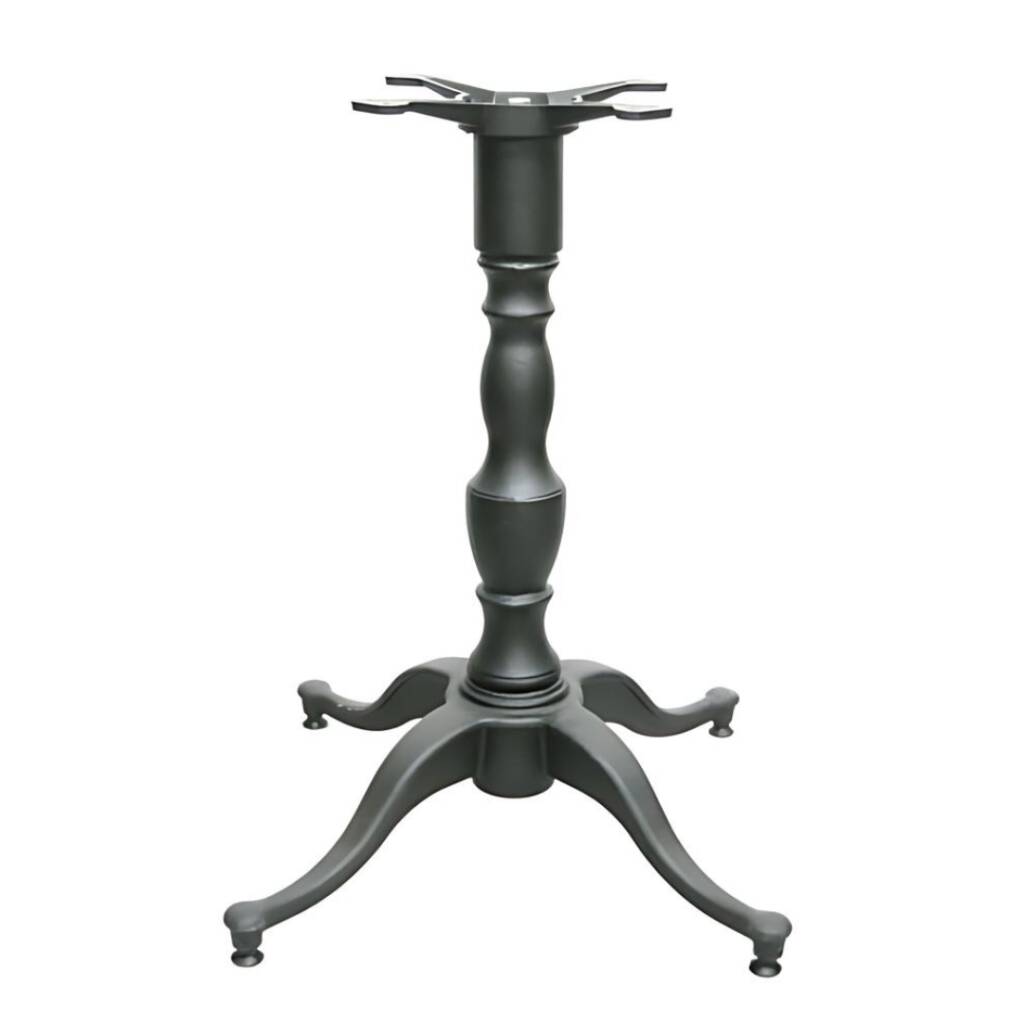
Ornamental cast iron bases combine decorative style with strong support. They fit bistros, themed restaurants, and dining rooms where the base is part of the interior design.
| Material / Finish | Main Advantage | Suitable Space | Buyer Note |
| Cast iron | Strong and stable | Restaurants, bars | Good for heavier tops |
| Steel base | Practical strength | Modern dining spaces | Check coating |
| Black powder coating | Surface protection | Indoor and patio areas | Good for frequent cleaning |
| Chrome finish | Polished look | Indoor cafés and bars | Needs surface care |
| Ornamental cast iron | Decorative support | Bistro interiors | Match the dining style |
How Should Buyers Choose Bases for Different Layouts?
Fast-casual restaurants need durable, simple, and easy-to-clean bases. Steel or cast iron bases with powder coating are practical choices for high-use dining rooms.
Cafés often need round bases or three-prong bases because they save space and support flexible seating.
Bars need bar-height bases, bases with ring support, or bolt-down bases. Taller tables require stronger stability because the center of gravity is higher.
Outdoor dining areas need finishes that can handle cleaning, floor contact, and moisture exposure. Powder-coated steel or coated cast iron bases are better than finishes intended only for indoor display.
Booth seating often works well with T bases because they support rectangular tops while keeping legroom open.
What Details Help Reduce Maintenance Costs?
Maintenance problems often come from loose screws, uneven floors, damaged coatings, unstable tabletops, and poor size matching. These small issues can increase labor costs after installation.
Smooth finishes help staff clean faster. Adjustable glides help correct uneven flooring. A secure top plate protects the tabletop connection. Consistent base models also help restaurant chains, contractors, and distributors manage repeat orders.
Before ordering, buyers should confirm tabletop size, tabletop weight, base footprint, column size, height, finish, indoor or outdoor use, leveling method, and top plate compatibility.
Schlussfolgerung
Selecting restaurant table bases for active dining areas demands a precise alignment. Buyers must match tabletop dimensions, base construction, and material type. Height, floor conditions, and service methods also matter. Round bases, cross bases, T bases, and prong bases serve specific purposes. Ornamental bases and bolt-down bases also accommodate distinct restaurant configurations.
At Fly Goat, we support restaurants, cafés, contractors, and furniture buyers with commercial table bases, table tops, and chairs for project purchasing and wholesale needs. Buyers can visit our official website to request an online quote, upload project details, or consult our team for tabletop and base matching support.
FAQ (häufig gestellte Fragen)
How do I prepare a wholesale quote request for commercial table bases?
Buyers should provide the base type, tabletop size, quantity, finish, height, indoor or outdoor use, and delivery location. Clear project details help suppliers check suitable options and quote faster.
Can I order different table base types for one restaurant project?
Yes. Many restaurant projects use several base types in one layout. For example, round bases may fit café tables, T bases may fit booth seating, and bolt-down bases may fit bar areas.
What information should I confirm before placing a bulk table base order?
Buyers should confirm tabletop shape, tabletop weight, base footprint, column size, top plate compatibility, dining height or bar height, finish, and installation environment before ordering.
What should buyers check for outdoor restaurant table bases?
Buyers should check whether the finish is suitable for outdoor or semi-outdoor use. Powder-coated steel or coated cast iron bases are common options, but coating, moisture exposure, cleaning frequency, and floor contact should be confirmed.
What after-sales details should B2B buyers confirm?
Buyers should confirm warranty terms, replacement parts, coating details, product matching support, bulk order handling, and repeat purchase availability.