Key Considerations When Choosing Commercial Table Bases
Durability and Material Strength
Any robust commercial restaurant or cafe relies on durable table bases. In a busy cafe or restaurant, it is crucial to select materials that can withstand continuous use.
Made from either cast iron or chrome-plated steel, our sturdy bases give a table a neat and robust appearance. Cast iron and steel are both extremely durable and are used frequently in the catering industry due to their reliability. In environments that are frequently disinfected or exposed to the elements, powder-coated finishes give a degree of extra protection.
One of the main considerations is stability. Restaurant tables should have sturdy legs to provide a stable dining surface, ensuring the comfort and safety of patrons by preventing the tables from wobbling. The stainless steel bases are incredibly strong and reliable. They will not break like cast iron ones can. This makes them more cost-effective as they need less maintenance.
Weight Capacity and Tabletop Compatibility
Commercial table base selection must be matched to the type and size of the tabletop being used. A mismatch can lead to instability and potential safety hazards. Heavier materials like solid wood or stone tops require equally heavy-duty bases.
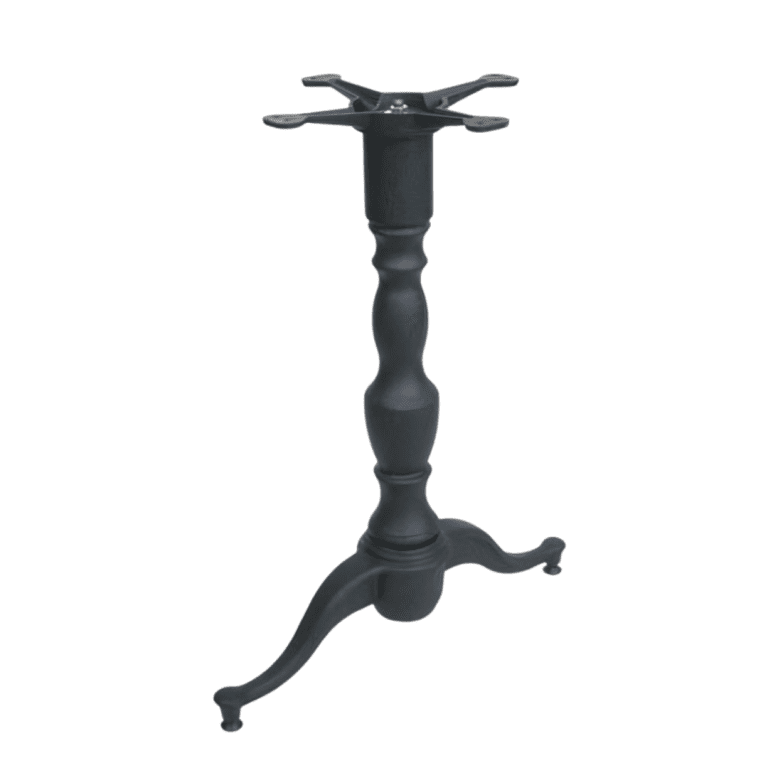
For example, the OM324 4 Prong Commercial Grade Restaurant Base is recommended for 48″ round tabletops, offering sufficient support for large surfaces. Pairing a lightweight base with a heavy top can cause tipping or structural failure.
Additionally, many commercial restaurant table legs now feature adjustable glides. These help ensure even footing on uneven floors, which is especially helpful in older buildings or outdoor dining areas.
Ease of Maintenance and Cleaning
Cleaning such premises quickly is crucial in busy restaurants. Finishes in either powder-coated steel or chrome reduce the maintenance involved in cleaning. The surfaces are resistant to the stains of grime, spills, and fingerprints, making them easy to sanitise between customers. Designs featuring minimal crevices and ornamentation help prevent the accumulation of dirt and make the cleaning process easier. Cleanliness materials that can withstand being exposed to many different cleaning chemicals are crucial for the upkeep of health and hygiene.
Popular Types of Restaurant Table Bases
Disc Bases for Stability and Clean Appearance
Disc bases are a staple in modern restaurant settings due to their sleek design and excellent stability. They provide strong central support while maintaining a low-profile appearance that complements minimalistic interiors. The centralized structure makes them space-efficient in tight dining layouts, preventing leg obstruction.
Their round footprint also means fewer corners where dirt can accumulate, making them easier to clean around—a crucial feature in high-turnover dining settings.
X-Shaped and T-Shaped Bases for Versatility
X-shaped (cross) and T-shaped bases offer flexibility across various table formats. They provide broad leg spacing that improves chair clearance and guest comfort. These shapes also make it easier to align tables side by side for communal seating arrangements.
The T-shaped OM222 Cast Iron Base is commonly used in longer tables where two bases are positioned at opposite ends. This configuration creates ample legroom while maintaining structural integrity.
These forms are highly adaptable and work well in both upscale and casual restaurant interiors.
Bolt-Down Table Bases for Fixed Seating Areas
Bolt-down bases are ideal for fixed layout environments such as food courts, diners, or outdoor patios where stability is a priority. These bases are physically secured to the floor, eliminating any movement regardless of usage frequency.
The FBDB8R Black Bolt Down Base is a common choice where security and consistency are required. Bolt Down Base 3″R column No Cover (4 Bolts Included). This option is especially useful in high-theft or high-traffic areas where traditional freestanding bases may shift or get damaged.
This type of base also ensures uniform table spacing throughout the venue, aiding in traffic flow planning.
Matching Table Base Design With Restaurant Aesthetics
Coordinating Base Styles With Interior Themes
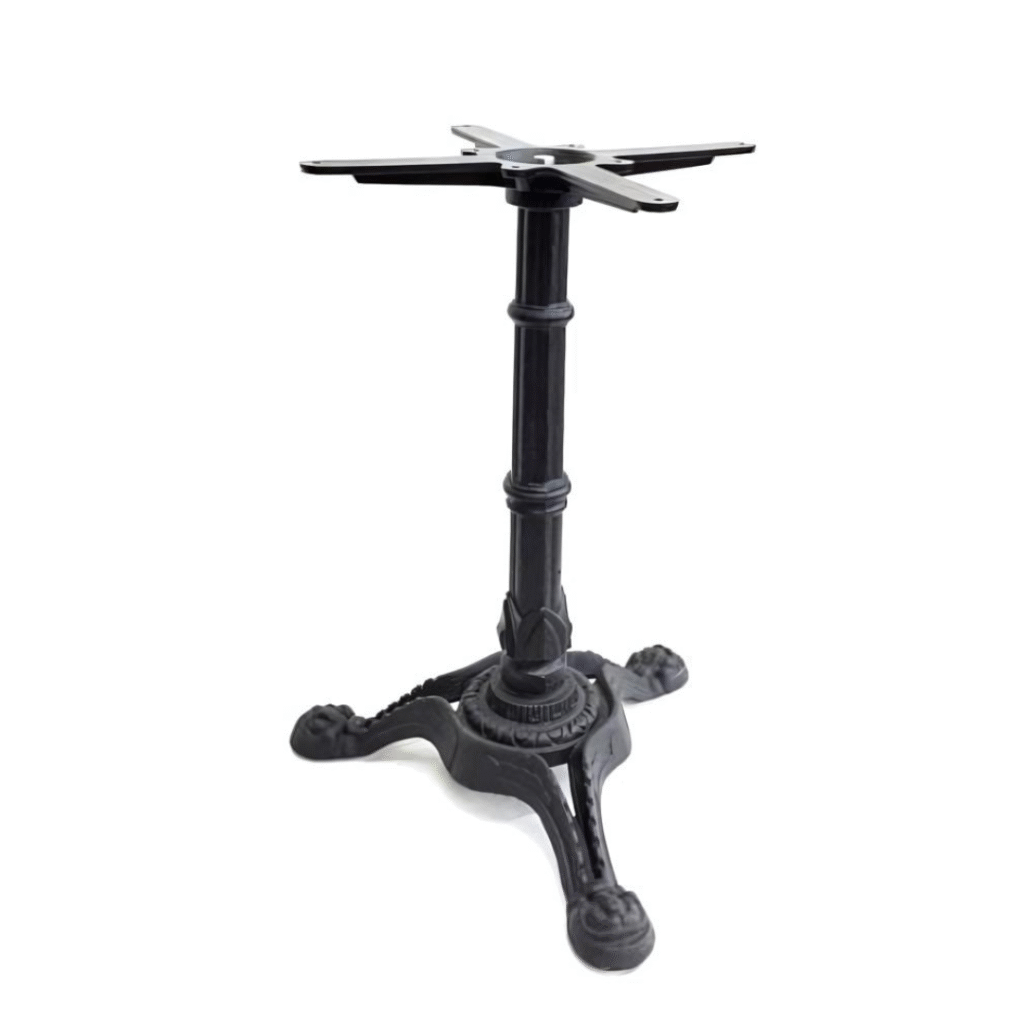
Choosing the right style of restaurant table feet or legs plays a significant role in preserving the venue’s interior design language. For industrial aesthetics, matte black steel or raw cast iron works best—such as our OM3 Ornamental 3 Prong Base, which adds character without being overly ornate.
Industrial interiors pair well with raw steel or matte black bases. Sleek chrome or polished finishes work well in contemporary settings that favor minimalism. For example, Chrome Base NC2222 offers a modern touch with the durability of cast iron.
Rustic or vintage settings may use ornate cast iron options, such as our OM17R or OM2424 ornamental models, which feature detailed craftsmanship to complement wood furnishings.
Custom Finishes and Decorative Elements
Restaurants looking for a distinctive look can opt for customized finishes. Some manufacturers offer color-matching or brushed metal finishes, which allow designers to match table bases with lighting fixtures, upholstery, or flooring schemes.
Decorative footings on bases like the OM2 Ornamental 2 Prong bring visual interest to otherwise functional components, enhancing ambiance without compromising strength.
Practical Tips for Selecting Restaurant Table Bases
Assessing Floor Plan and Traffic Flow Needs
When designing your dining area, consider how table base shapes affect movement. In narrow spaces, opt for centralized pedestal or disc designs that minimize leg spread and free up floor space.
Choose compact bases in tight spaces to maximize seating capacity. Avoid wide-leg frames in high-traffic zones where servers need clear paths between tables.
Properly spaced bolt-down configurations can help streamline guest flow while preventing crowding during peak hours.
Balancing Functionality With Budget Constraints
While style matters, material quality should take precedence when the budget is limited. Investing in durable commercial table base options means lower long-term costs due to fewer replacements.
Prioritize quality materials over aesthetic extras when budgets are tight. The return on investment includes reduced maintenance needs and minimized downtime from unstable or broken tables.
Fly Goat supports cost-effective choices by offering wholesale pricing with no compromise on quality. With over 15 years of industry experience, we pride ourselves on delivering top-notch products at competitive prices.
Fly Goat also offers custom options, enabling clients to mix and match finishes and materials for a unified look across seating and tables. At Fly Goat Inc., you get vast customization options to mix and match the table tops, chairs, and bases you look at on our platform.
FAQs
1. How do I know which table base matches my tabletop?
Check your tabletop’s size and material. Use heavier bases like OM324 for large stone tops and lighter disc bases like B17R for small wood ones.
2. Are bolt-down restaurant table bases difficult to install?
They require floor drilling but offer unmatched stability once installed—ideal for fixed layouts or outdoor patios.
3. Can I use indoor commercial table bases outdoors?
Only if they have weather-resistant finishes like black powder coating. Look for models like STB Steel Bases labeled for outdoor use.
4. Which base shape works best in tight dining spaces?
Disc or round pedestal bases take up less floor space and reduce chair interference, perfect for compact areas.
5. Are custom finishes available on all table bases?
Not all models allow customization. However, some lines from Fly Goat offer brushed metal or color-matched finishes upon request.