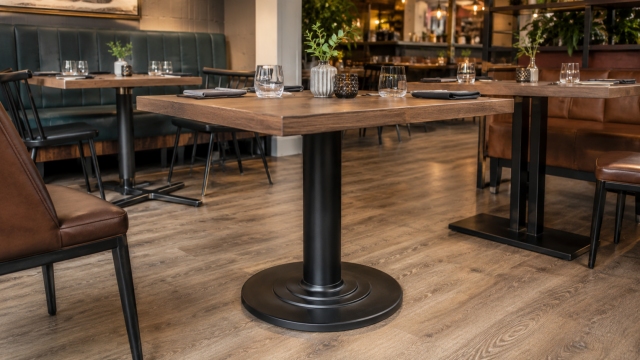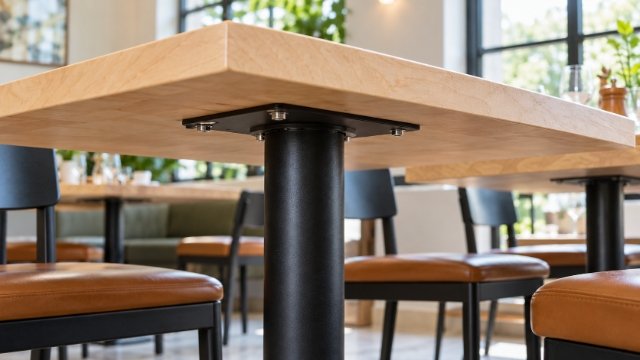
A dining room can look outdated despite the fact that there is some furniture which still has more to give. In terms of a distributor planning to refresh the restaurant, replacing the table tops is a wise decision prior to buying all new tables. This will depend on what pieces of furniture are going to be safe to keep. Additionally, this will depend on how well the new birch top will work together with the existing ones. Moreover, it is important to take into account whether the renewal will be done step by step.
Which parts of the existing table can stay
Restaurant table top replacement starts by checking the condition of the kept furniture. You need to separate tables with simple surface wear from those with broken supports. Also, set aside tables with loose connections or constant wobbling. A new top fixes the dining surface. However, it will not fix a broken base hidden underneath.
Your inspection must group matching assemblies together. Note the base model whenever possible. Also, record the top dimensions and the mounting setup. Tables that seem identical across the room might actually have varying plates or different replacement parts below. You should treat any uncertain setups as a distinct group until you confirm their condition and exact identity.
| Existing condition | Likely refresh route | What needs confirmation |
| Worn surface with sound, identified base | Consider top replacement | New top and mounting compatibility |
| Sound top with finish wear only | Compare refurbishment with replacement | Condition and suitable finish treatment |
| Damaged base or insecure structural joint | Assess the complete table | Repair feasibility before reuse |
| Mixed or unidentified components | Inspect assemblies individually | Which combinations can be retained |
Keeping a base means you are deciding to leave a specific setup in active use. Do not approve every single table just because one sample seems sturdy. When dealing with a multi-venue order, request each location to point out exceptions before you finalize the total numbers.
Birch tops give the refresh a defined scope
Discussing a replacement plan is much simpler when the material and the expected look are clearly defined. For projects that utilize birch, Fly Goat restaurant furnishings provide customizable birch wood tops along with table bases and chairs. This gives the buyer a precise surface choice to review. They can do this without assuming that every old support will automatically match it.
You must consider the natural variations of birch on a whole-room scale. Check samples to find the general color and wood grain you prefer. At the same time, understand that real wood pieces will never look exactly the same. If the kept furniture looks aged, place the sample next to it under the actual venue lighting. Do this before setting final expectations for the upgrade.
Shape and dimensions
The new top must maintain the planned dining layout. A broader replacement might alter how chairs fit around it. It can also change how close neighboring tables sit and how easily guests walk between them. Always measure the real layout before assuming that a larger surface is a simple improvement.
Square and rectangular shapes work for different floor plans. A distributor updating small tables might keep one shape. Meanwhile, longer group tables require their own separate evaluation. Keep these decisions connected to how the room is actually used. Do not try to force one replacement size onto every single old table.
Thickness and the finished table
Thickness impacts much more than just the look of the edge. When placed on the same support beneath it, a thicker top increases the final table height. This change might alter how deeply the fasteners need to engage. Always verify the planned construction and the final assembled height. Do not just copy the old screw length without double-checking.
The bottom side of the table is also important in this comparison. Aprons, extra support blocks, and mounting parts can change how the top rests on its base. You should evaluate the complete replacement sample thoroughly before you commit to the entire order.

The first replacement should answer the fit questions
A sample build must truly represent the furniture that will stay in the room. Attach the planned top to a checked base from the correct group. Use the agreed mounting method for this test. Then, review the final product in its actual spot. This includes checking seating positions and any intended layout of nearby tables.
When dealing with wooden table tops for restaurants, the mounting technique must match the specific wood build. Request the top supplier to verify the attachment specifics. Also, ask about any needed allowances for natural wood movement. Just having a matching hole pattern does not guarantee the entire mounting method is correct.
Your approval must address any practical changes from the old setup:
- The finished height and usable space beneath the edge.
- The location and suitability of the mounting points.
- The top’s alignment on the retained base.
- The assembled table’s behavior in normal intended use.
A failed sample provides very useful data. You must fix the root cause before changing the proposal into a large batch order. Making holes bigger or swapping screws on site without a set plan can cause trouble. It can turn a small mismatch into wobbly, inconsistent tables all over the dining room.

A phased refresh needs a workable grouping
Updating tables in batches can assist a venue in planning around its open hours. Group the items by verified assembly type and by the specific area being updated. Maintain a clear record of which tables have been changed. This helps ensure that future deliveries and repair requests match the exact right version.
You should also inspect a partial update visually. Placing one fresh top next to several worn surfaces might look strange compared to a fully updated seating zone. Check with the operator if the installation should happen by room, by row, or by another specific zone. There is no single order of steps that perfectly fits every restaurant.
You must handle replacement base needs as special cases. If a base cannot stay, check suitable restaurant table bases for replacements against the approved top. Never quietly swap out supports inside a batch that is supposed to be standard.
What belongs in the cost comparison
The most useful comparison is the total cost of a fully usable, updated table. You must include the top, the inspection time, the correct hardware, the assembly labor, and the removal of the old surface. Compare that total against buying a brand new table using the exact same factors. You will not find a standard savings percentage that applies to every single project.
Surprise base repairs can quickly alter your math. A plan that seemed cheap when assuming all bases were good might require a new budget. This happens once you separate the broken setups. Therefore, keep your count of retained bases as an estimate until the full inspection is done.
Because of this, restaurant table tops for sale must be judged against the whole upgrade plan, not just by a single unit price. Verify the design options, the sample testing steps, and the current business terms for the actual order. Never assume that a special custom size will be just as easy to get as a standard top in the catalog.
A successful refresh keeps only what still works
Changing the top is a logical choice when the old base is strong, the new birch top fits it well, and the whole setup has been tested. You should approve one typical combination first. Then, plan for any exceptions and organize the room in easy-to-handle groups. Making these clear choices gives the distributor a solid foundation for ordering the right amount of replacements.
To talk about a birch tabletop upgrade, contact us with your planned sizes and the details of the bases you want to keep.
Domande frequenti
Can restaurant table tops be replaced separately?
Yes, this works when the kept base is sturdy and the new top fits it properly. Always verify the full setup before you order a large batch of replacements.
Can the old mounting screws be reused?
You can reuse them only after checking their condition, style, and length against the new top and the new mounting plan. A different board thickness or a new bottom design might require brand new hardware.
Is a larger replacement top a simple upgrade?
No, it requires a completely new review. Bigger sizes can alter the balance, the seating space, and the whole room layout. This is true even if the new top seems to fit easily on the old mounting plate.
Must every restaurant top be replaced at once?
No. You can organize a step-by-step plan by checked table types and specific dining zones. Look at how the new and old surfaces will appear together before you pick the best schedule.
How can a distributor compare replacement costs fairly?
You should compare the final, fully installed results. Add in the inspection, the building time, the hardware, and the cleanup, along with the top’s price. Also, make sure to budget for any bases that are too damaged to keep using.