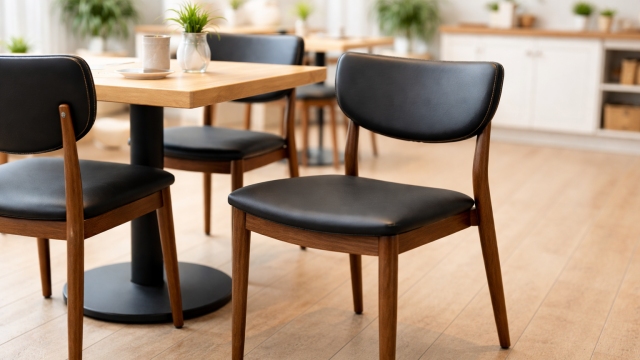
Bulk table-base buying often feels settled on paper, then gets tested by servers, chairs, mops, uneven floors, and guests leaning on the edge of a table. Before a container order makes sense, a buyer has to connect table size, traffic flow, finish durability, and shipment consistency. This guide gives wholesale restaurant furniture buyers a practical way to specify stable, repeatable, commercial-ready orders.
The Buying Decision Behind a Stable Dining Room
Restaurant projects need bases that survive repeated seating turns, cleaning routines, and the occasional hard bump from the side. For buyers comparing base da tavolo ristorante commerciale, stability is not one label on a catalog page. It comes from the relationship between footprint, column strength, top weight, glide adjustment, and careful installation.
A wholesale order works better when the dining layout leads the choice. Small two-top tables, long rectangular booths, bar-height counters, and outdoor patio tables all load the base differently. Once those zones are named, the buyer can compare product families without overbuying weight or choosing an attractive base that will struggle under the intended top.
What buyers should define first
*Tabletop shape and size for each dining zone.
*Finished table height, including top thickness and base height.
*Indoor, outdoor, bar, cafe, or hotel-use environment.
*Floor condition and whether level glides are needed.
*Finish preference, such as black powder coating, gray, chrome, or ornamental cast iron.

Materials and Base Families Change the Risk Profile
Commercial buyers usually compare cast iron, stamped steel, and other steel bases because each material handles a different concern. Cast iron brings useful mass and a familiar indoor restaurant look, while steel options can provide a smoother finish and strong breakage resistance in busy rooms. Chrome finishes should be kept separate from black outdoor powder-coated options because finish choice changes the proper use environment.
A mixed restaurant program may need booth rows, two-top dining tables, cafe corners, and a few fixed bar positions in the same shipment. Fly Goat offers T bases, round bases, cross bases, ornamental bases, prong bases, bolt-down bases, and selected outdoor black steel base options for restaurant and cafe projects. The practical value is the ability to match base geometry to table size, dining style, and later replenishment.
| Base family | Useful project fit | Buyer check |
| T base | Rectangular tops, booth rows, paired long tables | Confirm single or paired base use for the top length |
| Round base | Square or round two-top and four-top dining tables | Check diameter and column size against top weight |
| Cross base | General dining rooms and larger square tops | Match cross footprint to guest leg clearance |
| Prong base | Traditional dining layouts and ornamental styles | Confirm recommended top size for three- or four-prong models |
| Bolt-down base | Fixed-position bar or public-use seating | Confirm floor anchoring requirements before ordering |
Sizing Details Prevent Expensive Returns
A table base can be heavy and still feel wrong when the footprint does not suit the top. Fly Goat model references include B17R for 24 inch square, 24 by 30 inch, 30 inch square, 24 inch round, and 30 inch round tops. B22R moves into larger formats, including 24 by 42 inch, 30 by 42 inch, 30 by 48 inch, 36 inch square, 36 inch round, and 42 inch round tops.
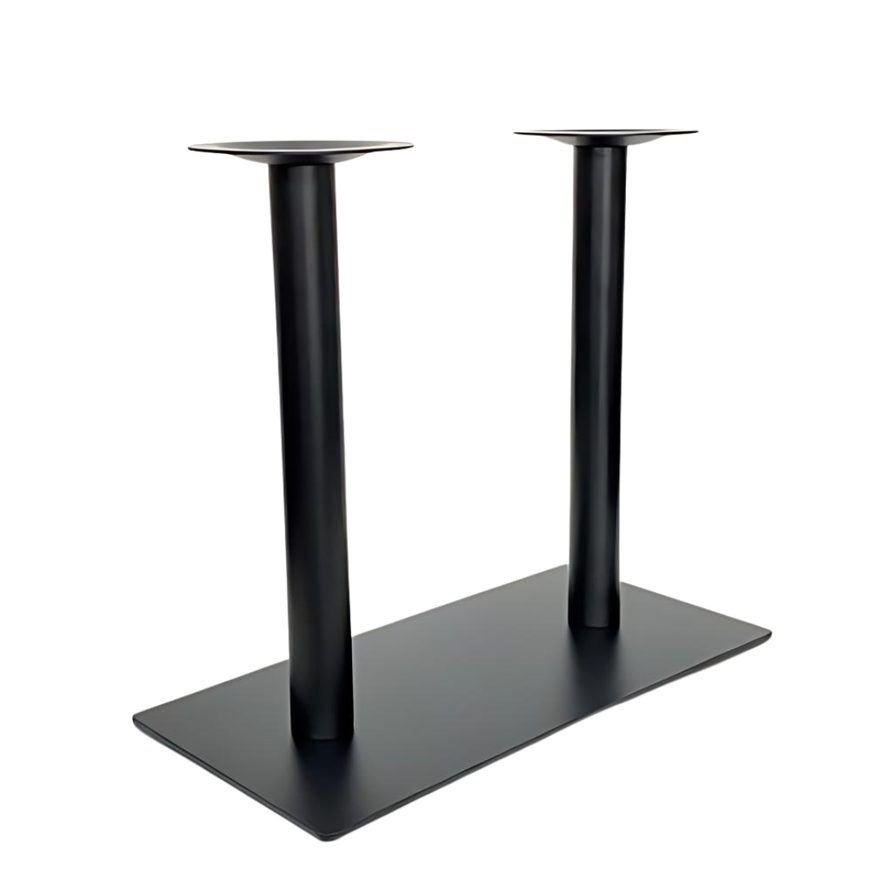
Long rectangular tops deserve an extra count check because many layouts need paired bases. Cast iron T-base models such as OM222 are used in pairs for 30 by 48 inch, 30 by 60 inch, and 30 by 72 inch tops. Putting that pairing rule into the purchase specification prevents a frustrating receiving-day problem: the shipment is complete, but the installation team is short on usable support points.
Height and top-plate checks
Finished height should include the base, column, top thickness, and any glide adjustment. Several Fly Goat table bases are available in standard 28 inch dining height and 40 inch bar height, although some models limit column size or bar-height availability. Buyers should also confirm the top plate, especially when matching wood tops with outdoor steel bases or custom table tops.
Supplier Evaluation Should Stay Product-Specific
A reliable Fly Goat restaurant table bases supplier should help buyers keep model evidence tied to the exact base being ordered. Ask for model names, recommended top sizes, finish limits, and assembly notes rather than a broad assurance that every base is heavy duty. That discipline matters when cast iron, steel, chrome, and outdoor-use items appear in one program.
Fly Goat grew from a family-owned Suzhou factory established in 1999 and now serves North American and European restaurant furniture markets through a supply chain focused on iron components, cast iron, stamped steel bases, chairs, and table tops. For wholesale buyers, that background is useful when the order depends on consistent production, container-level coordination, and repeat replenishment.
Commercial fields to include in the RFQ
*Exact model number and finish for each dining zone.
*Top size, top material, and top thickness to be mounted.
*Dining height or bar height requirement.
*Indoor or outdoor placement, especially for black powder-coated steel bases.
*Container quantity, packing expectations, and replacement continuity.
A final approval sheet should also separate what is fixed from what can change. Model number, top-size range, finish, height, and paired-base quantity should stay fixed once the sample is approved, while delivery schedule or branch-by-branch quantities can remain adjustable. This prevents a late purchasing change from accidentally changing the support system that the dining room already accepted.
A Practical Summary for Wholesale Buyers
The strongest buying decision connects dining layout, tabletop format, material, finish, and installation method before price comparison begins. When buyers use a table bases procurement guide in that order, they reduce wobble complaints, mismatched base counts, finish confusion, and delayed openings.
For restaurant, bar, cafe, or hospitality projects that need repeatable container orders, contact us with table sizes, finish needs, and project quantity.
Domande frequenti
What makes a restaurant table base commercial grade?
A commercial-grade base should match the tabletop size, provide enough footprint and column strength, use a finish suitable for the setting, and tolerate repeated daily use in restaurants, cafes, bars, or hotels.
Are cast iron or steel table bases better for restaurants?
Cast iron is useful for mass and traditional indoor stability, while steel bases can offer strong breakage resistance and smooth finishes. The better choice depends on table size, placement, finish, and expected traffic.
Do long rectangular tops need two table bases?
Many long rectangular tops perform better with paired T bases. Product-specific guidance should confirm whether one base or two bases are needed before the order quantity is locked.
Can black steel table bases be used outdoors?
Some black powder-coated steel bases are suitable for indoor and outdoor use, but chrome finishes and model-specific limitations should be checked before placing an order.
What information should buyers send before ordering table bases wholesale?
Buyers should send table sizes, top material, height requirement, base style, finish, quantity, project timeline, and whether the furniture will be used indoors or outdoors.