Introduzione
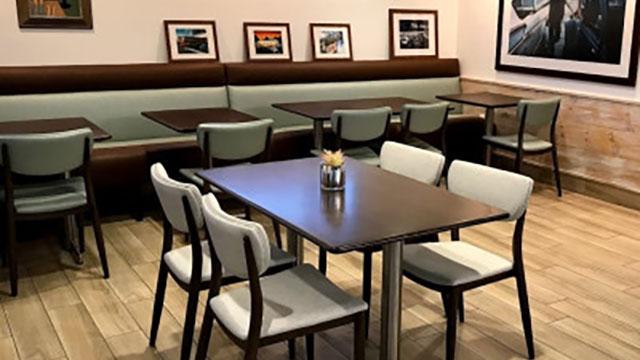
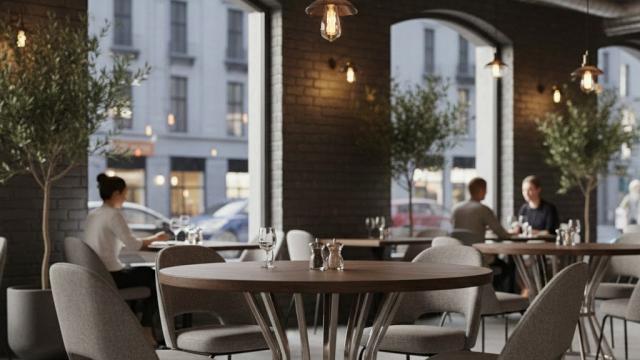
In commercial dining environments, stability is not a design detail but a core operational requirement. The relationship between tabletop dimensions and base configuration directly affects safety, guest experience, and daily service efficiency. Selecting the right restaurant table base is therefore a structural decision that must align with real load conditions, not only visual style.
Fly Capra explains how table top size determines the correct dining table base selection and how B2B buyers can reduce risk through proper sizing logic, supported by commercial furniture engineering standards used across restaurant projects.
Structural Logic Behind Restaurant Table Base Sizing
The selection of a restaurant table base is driven by load distribution, leverage control, and footprint stability. A tabletop behaves like a lever: the wider the surface, the greater the tipping force at the edge when pressure is applied.
For basi da tavolo per ristoranti, three engineering principles define correct sizing:
- Base footprint must extend beyond the tabletop center of gravity radius
- Column strength must support vertical load plus lateral force
- Material density must counterbalance top-heavy configurations
In commercial use, cast iron and reinforced steel bases are widely used due to their weight stability and resistance to long-term deformation .
Standard Table Top Sizes and Matching Base Requirements
In global restaurant procurement practice, tabletop dimensions are typically standardized into key ranges. Each range requires a different structural response from the dining table base system.
The table below summarizes common matching logic used in B2B restaurant furniture selection.
| Dimensione della parte superiore del tavolo | Seating Use | Tipo di base raccomandato | Stability Level |
| 24″ x 24″ / 24″ round | 1–2 seats | Small round base / light cross base | Basic stability |
| 30″ x 30″ / 30″ round | 2 seats | 17″–22″ round base | Light commercial use |
| 36″ x 36″ / 36″ round | 2–4 seats | Medium cross base / 22″–30″ base | Standard stability |
| 42″ round | 4 seats | Heavy round or 4-prong base | High stability |
| 48″ round | 4–6 seats | Reinforced cast iron base or dual support | Maximum stability |
Rectangular configurations follow a different logic due to uneven load distribution.
| Dimensione della parte superiore del tavolo | Seating Use | Base Configuration |
| 30″ x 48″ | 2–4 seats | Single heavy cross base |
| 30″ x 60″ | 4 seats | Dual base support system |
| 30″ x 72″ | 6 seats | Double T-base structure |
These configurations reflect widely adopted commercial furniture engineering practices used in restaurant layout planning.
How Load Distribution Changes with Table Shape
The shape of the table significantly affects how force travels through the structure. In commercial dining operations, this determines whether a restaurant table base will remain stable under daily stress.
Round tables distribute weight evenly across the center axis, reducing tipping risk. Square tables concentrate stress at corners, requiring a wider base footprint. Rectangular tables introduce torque imbalance, especially when guests lean on extended edges.
For this reason, larger rectangular tabletops often require dual-base systems instead of a single central support.
Commercial Table Base Types and Their Functional Roles
Different base structures are designed for different operational environments. Based on our product system, we design multiple structural categories for restaurant use .
T-Base Systems for Long Tables
T-base structures are used for rectangular tables where linear stability is required. The dual-support geometry distributes load across extended surfaces, making it suitable for booth seating and long dining setups.
Cross Base Systems for Balanced Loads
Cross bases provide symmetrical support and are commonly used in mid-size square tables. Their balanced footprint reduces wobble in high-traffic dining environments.
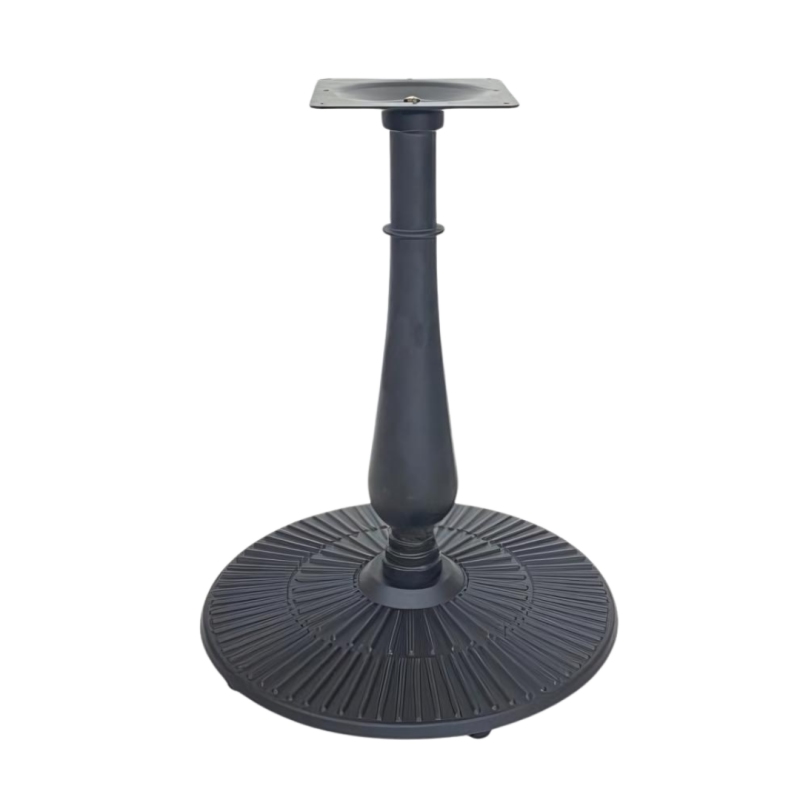
Round Column Bases for Compact Seating
Round bases are widely used in café and fast-casual dining spaces. Their compact footprint improves space efficiency while maintaining adequate stability for small tabletops.
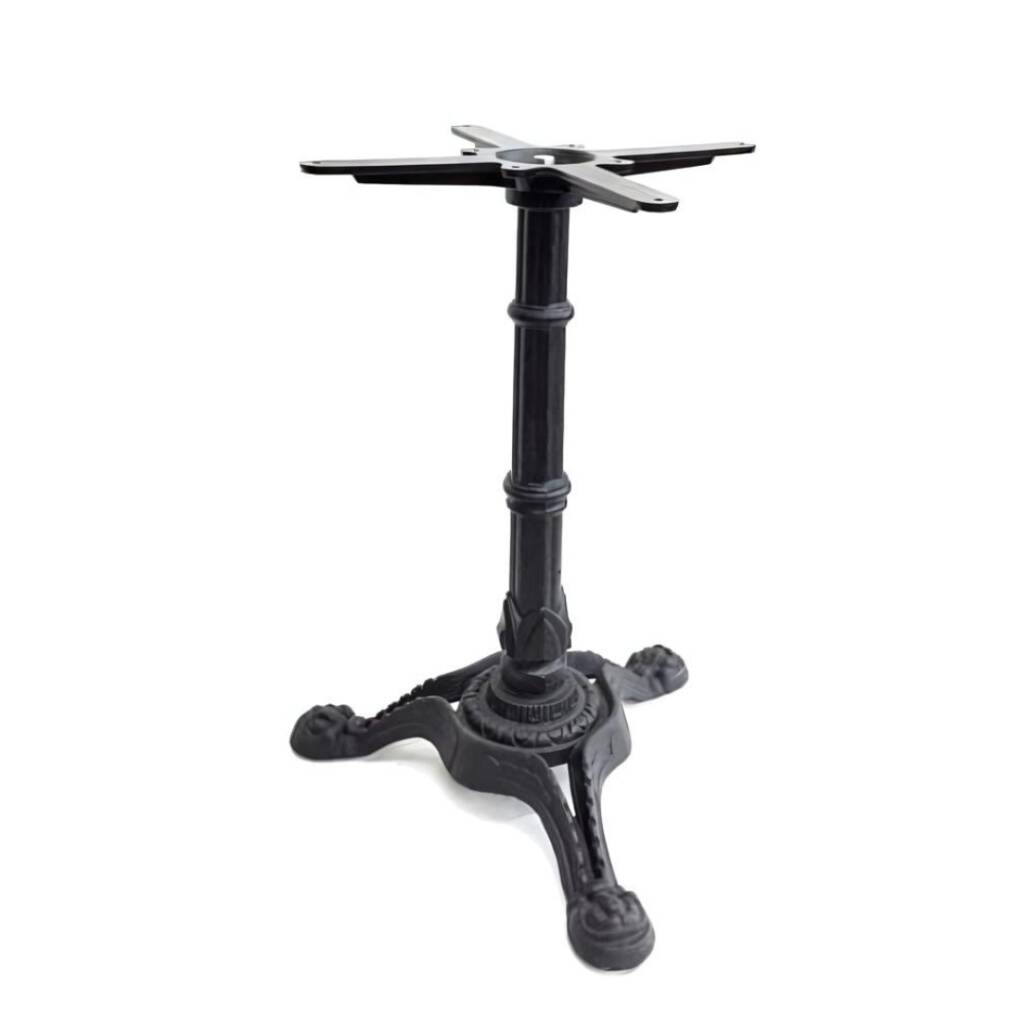
Prong Bases for Heavy Load Applications
Three-prong and four-prong bases are engineered for high-stability environments. They are especially effective for larger table tops (36″–48″) where lateral force is more significant.
Ornamental Cast Iron Bases for Premium Spaces
Cast iron ornamental bases combine decorative value with structural weight. Their mass improves resistance to movement, making them suitable for fine dining environments where both aesthetics and stability matter.
Fly Goat Commercial Table Base System Overview
As a commercial furniture supplier focused on North American and European markets, we design and manufacture systems that support high-frequency restaurant operations.
Our production system includes cast iron, stamped steel, and powder-coated base structures engineered for durability and stability in commercial environments. We maintain ISO9001-certified production standards and supply B2B clients across the global hospitality sectors .
The design priority is consistent: ensure each dining table base performs under real restaurant conditions, including uneven floors, constant movement, and repeated load stress.
Risk Factors in Table Base Selection for Restaurants
Incorrect table base sizing is one of the most common causes of operational issues in restaurants. These risks often appear only after installation.
Key risk factors include:
- Edge load tipping when guests lean or place weight on one side
- Base undersizing relative to tabletop diameter
- High-traffic vibration from staff movement
- Uneven flooring conditions in older buildings
- Heavy tabletop materials such as solid wood or stone
These factors directly affect long-term maintenance costs and customer safety.
Installation Guidelines for Stable Dining Layouts
Proper installation ensures that even correctly sized components perform as expected in real environments.
Recommended practices include:
- Match base footprint with tabletop diameter increase ratio
- Use adjustable glides for uneven flooring correction
- Avoid single-base solutions for tables above 60 inches in length
- Ensure mounting plate compatibility with tabletop structure
- Prioritize weighted bases for high-traffic seating areas
For procurement teams, verifying these parameters during ordering reduces long-term operational issues significantly.
Procurement Checklist for B2B Buyers
Before selecting a restaurant table base system, buyers should confirm:
- Exact tabletop dimensions and thickness
- Seating capacity per unit
- Material weight category
- Restaurant traffic intensity level
- Indoor or outdoor usage requirements
- Floor condition and leveling needs
- Desired base structure type
- Stability expectations under lateral force
Conclusione
Correct matching between tabletop dimensions and base structure is a critical factor in restaurant furniture performance. A properly selected restaurant table base improves stability, reduces maintenance risk, and supports efficient space planning in commercial dining environments.
For project-based procurement or bulk orders, configuration support and technical consultation are available to ensure optimal system matching across all table bases for restaurant applications.
If you are planning a new restaurant layout, upgrading existing furniture, or sourcing bulk commercial table bases, we can support you with technical sizing guidance, material options, and fast quotation based on your project drawings.
Visit Fly Capra to upload your table top dimensions or layout file, and our team will provide a matched dining table base solution within a short response cycle.
Fly Goat helps restaurant buyers reduce stability risk, optimize seating layout efficiency, and ensure long-term durability across all table bases for restaurant applications.
Domande frequenti
How do I choose the correct dining table base for my table top size?
Selection depends on tabletop diameter, weight, and seating capacity. Larger tops require wider and heavier bases to maintain balance and prevent tipping under lateral force.
What happens if the table base is too small for the tabletop?
An undersized base increases tipping risk, reduces stability, and may lead to structural failure in high-traffic restaurant environments, especially when guests lean on edges.
Are heavier bases always better for restaurants?
Heavier bases improve stability, but proper footprint design is equally important. Overweight bases without correct geometry may still fail under uneven load distribution.
Can one base support long rectangular tables?
Only in limited cases. Tables above 60 inches typically require dual-base or reinforced T-base systems to prevent central sagging and instability.
Does Fly Goat provide customized table base solutions?
Yes. We support custom configurations for restaurant projects, including base sizing adjustments, material selection, and compatibility with different tabletop formats.