


Introduzione
A restaurant table base is a core component of commercial furniture performance. It affects table stability, dining comfort, and long-term maintenance costs in busy hospitality environments. At Fly Capra, we supply restaurant table bases including cast iron and steel structures for cafés, restaurants, bars, and chain projects across North America and Europe.
This article compares cast iron table base and steel table base to help B2B buyers choose the right solution for different restaurant applications.
Why Restaurant Table Bases Matter in Commercial Spaces
Restaurant tables are used continuously in high-traffic environments, which makes stability a functional requirement rather than a design preference. A weak base can cause wobbling, safety risks, and customer dissatisfaction. For operators, this also leads to higher maintenance time and replacement cost.
Commercial table bases must support daily cleaning, shifting layouts, and different tabletop materials. In practice, the base structure directly impacts operational efficiency, especially in chain restaurants and high-turnover dining rooms.
What Makes a Cast Iron Table Base Suitable
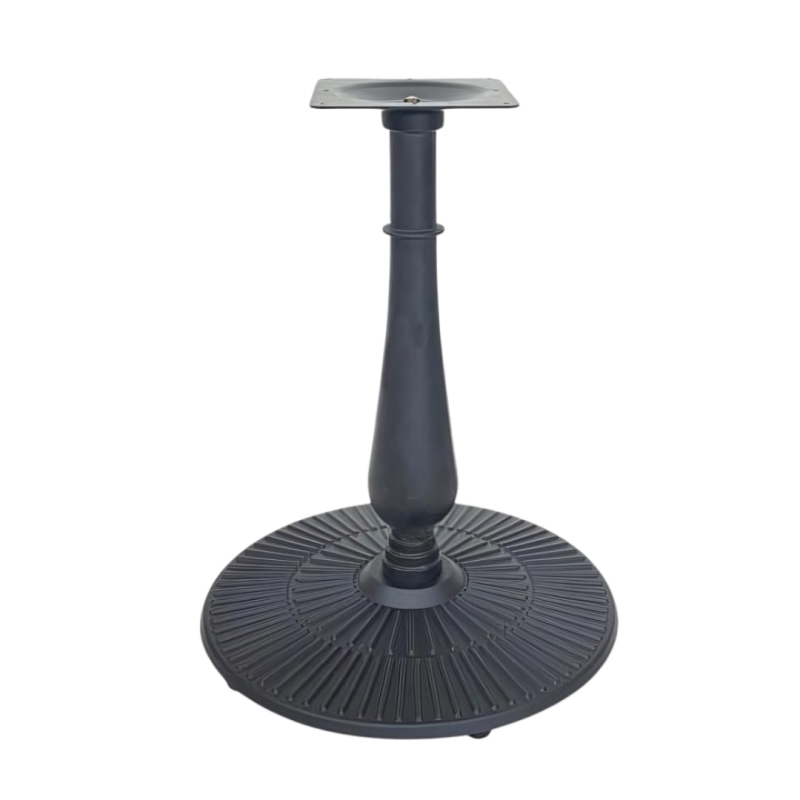
A base tavolo in ghisa is widely used in traditional and heavy-duty restaurant environments due to its weight and grounding stability. The mass of cast iron helps reduce movement during customer use, making it suitable for fixed dining layouts.
Cast iron designs include round bases, cross bases, T-bases, prong bases, and ornamental bases, all commonly used in restaurant table systems. These structures are designed for different tabletop sizes, from compact café tables to large dining setups.
Cast iron is also preferred for visual consistency in classic interiors. It pairs well with wood and stone-style tabletops and is often selected for bistros, pubs, and traditional dining spaces where furniture contributes to atmosphere as well as function.
However, cast iron requires careful handling during installation due to its weight. It is less flexible for frequent layout changes and can increase labor effort in fast-paced commercial environments.
What Makes Steel Table Bases Practical
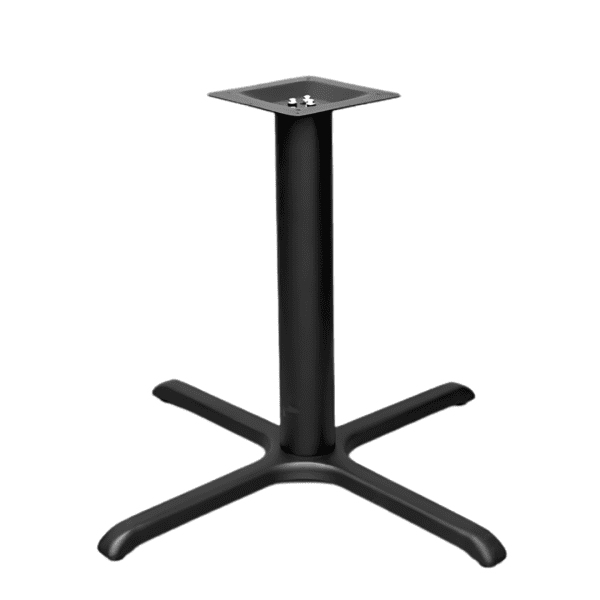
Steel table bases are increasingly used in modern restaurant projects because they balance strength and operational efficiency. Compared to cast iron, steel is easier to handle during installation, relocation, and large-scale deployment.
Steel commercial table bases often feature powder-coated finishes that improve durability in both indoor and outdoor environments. The black powder coating is a key advantage for protection and long service life in restaurant use.
Another practical advantage is the assembly structure. Many steel bases use a three-screw design and adjustable level glides, improving stability on uneven floors while reducing loosening during long-term use.
For chain restaurants or renovation projects, steel bases offer better consistency in mass procurement and faster installation across multiple locations.
Cast Iron vs Steel Table Base Comparison
The choice between cast iron and steel depends on the usage scenario, design requirement, and operational needs.
| Factor | Cast Iron Table Base | Base tavolo in acciaio |
| Stability | High due to weight | Stable with engineered structure |
| Installation | Heavier, slower setup | Easier handling and faster setup |
| Design style | Classic, ornamental options | Modern and functional |
| Maintenance | Low movement but heavy handling | Easier replacement and adjustment |
| Outdoor use | Depends on coating | Powder-coated suitable for outdoor |
| Best use case | Fixed seating restaurants | Chain stores and flexible layouts |
From a procurement perspective, both materials fall under restaurant table bases and commercial table bases, but they serve different operational strategies.
How to Match Table Bases with Table Tops
Proper matching between base and tabletop is essential to avoid instability or over-specification. Round tabletops typically require central support such as round or cross bases. Square tabletops often use cross or prong structures for balanced load distribution.
Long rectangular tables may require T-base or double base support to ensure even weight distribution. The larger tabletops often use multiple base configurations for stability, especially in commercial dining environments.
For B2B buyers, selecting the correct dining table base reduces return risk and ensures long-term performance under high usage.
Commercial Procurement Considerations
When sourcing basi da tavolo da ristorante pesanti, buyers should focus on more than appearance or unit price. Key factors include material strength, coating durability, installation method, and compatibility with table tops.
We also support wholesale projects, including T-base table bases wholesale, cross table bases supplier demand, and large-scale heavy-duty table bases wholesale orders for chain restaurants and distributors.
Supply consistency is critical for commercial projects. Buyers often require uniform models across multiple branches, making production stability and inventory capability important factors in supplier selection.
As a heavy-duty table bases supplier, we focus on stable production systems, ISO-certified quality management, and export-ready packaging for international markets.
Best Use Scenarios
Cast iron table bases are best suited for fixed-layout restaurants, traditional interiors, and heavy tabletop applications where stability is the top priority.
Steel table bases are more suitable for fast-service restaurants, franchises, outdoor dining areas, and projects requiring frequent layout adjustments.
In many commercial projects, a mixed approach is used, combining both materials depending on zone requirements within the same venue.
Conclusione
Choosing between cast iron and steel restaurant table bases depends on balancing stability, flexibility, and operational efficiency. Cast iron provides strong, grounded support for fixed dining environments, while steel delivers practical advantages in installation speed, outdoor adaptability, and large-scale commercial use.
At Fly Goat, we support global buyers with customized commercial table bases solutions tailored to restaurant layout, tabletop specifications, and procurement scale.
For quotations, bulk orders, or project customization, visit our website.
Domande frequenti
What is the main difference between cast iron and steel table bases?
Cast iron focuses on weight-driven stability, while steel focuses on structural efficiency and easier installation for commercial use.
Are heavy-duty restaurant table bases suitable for outdoor restaurants?
Yes. Steel bases with powder coating are commonly used for outdoor dining areas due to corrosion resistance and durability.
Can I order wholesale table bases for restaurant chains?
Yes. We support heavy-duty table bases wholesale and customized bulk production for chain restaurants and distributors.
How do I choose the right dining table base size?
Selection depends on tabletop size, shape, and material weight. Larger tops require wider or reinforced base structures for stability.
Do you provide cross and T-base options for bulk orders?
Yes. We supply cross-table bases, supplier solutions, and T-base configurations suitable for different restaurant layouts.

