The post Restaurant Table Mounting Plates That Reduce Risk appeared first on FLYGOAT.
]]>
A restaurant table specification might look complete. Still, it can easily miss the main part that holds the whole system together. The mounting plate controls how the top joins the base. It also guides fastener alignment. Plus, it decides how much variation happens during assembly.
The plate is where stability becomes practical
A mounting plate turns a base and a top into a working table. Sometimes, this plate does not match the top size. It might also clash with the screw pattern or the setup method. If this happens, the finished table can get loose. This problem shows up even when the base stands firm.
Wholesale buyers frequently check Fly Goat table top mounting support. They need to see the plate as a key risk-control feature. It is certainly not a basic add-on.
The most useful knowledge here is very practical. A good plate must keep the surface centered. It must let the installer lock it down tight. Also, it has to support the furniture during daily cleaning. It must handle regular movement and steady guest use.
The plate connects several buying decisions
The mounting plate sits right between product choice and real installation. It heavily affects base compatibility. It also plays a role in future top replacements. Besides that, it changes screw choices. It decides if a single base can hold several different tops.
This plate also sets the margin of error for on-site installers. Sometimes, a plate is too small. Other times, it sits in the wrong spot. Often, the official order record leaves these details unclear. When this happens, small errors multiply quickly across many assembled tables.
Doing a plate review is very helpful. This step matters most when a project mixes new tops with older bases. The visible dining surface might look familiar. At the same time, the hidden underside changes the whole fastening plan.

Top size and plate coverage
Some base groups note that the top plate might change based on the specific table top. That warning is very important. A replacement top might need a totally different plate setup than the first order.
Birch table tops offer great custom options. Because of this, underside details must always match the visible size and finish. A buyer might only note the outward look. This mistake leaves the installer without the most vital connection facts.
Teams often list restaurant table base parts for specification. During this step, the top plate must appear right next to the column details. It should sit near the finish, height, glides, and hardware. It must never hide at the bottom of the order sheet.
Fastener access and assembly repeatability
Fastener access decides if installers can copy the approved assembly well. STB steel bases use a special three-screw design. This setup helps stop loosening over time. It also makes the build process much simpler. As a result, buyers get a strong detail to check during their sample review.
| Plate question | Why it matters | Buyer action |
| Does the plate fit the top size well | Bad coverage can increase flexing. It might also cause off-center mounting. | Match plate specs with every approved top. |
| Can installers reach all fasteners | Hard-to-reach spots cause uneven tightening. | Do a test build on the sample table. |
| Will the surface change later | New tops might move the hole spots. | Record the plate and the exact screw pattern. |
| Will the table sit outdoors | Surface finishes and hardware exposure matter a lot. | Check the finish needs before ordering. |
Assembly control prevents hidden variation
Hidden variation usually shows up when different installers fix the same plate problem in different ways. Because of this, one table might feel perfectly steady. At the same time, another unit with the same base might start wobbling in just a few weeks.
Giving clear steps for fastening table top to base correctly will cut down that variation. This works because the installer knows the center point early on. They also understand the screw pattern and hardware needs before building the first table.
The first receiving check must include a fully built sample. It should never rely on loose parts alone. A fully assembled table shows if the plate, top, base, and glides work well together. You can test this setup by pushing gently along the edge.
Teams should keep this physical sample as a solid guide for future production. It helps with stock orders later. Taking clear photos of the underside is a great idea. You should also snap pictures of fastener spots and the final table height. These photos give the next build team a real standard to follow.
- Photograph the approved underside of the sample table.
- Record plate size, screw pattern, and hardware type.
- Confirm whether the same plate works across all planned tops.
- Keep plate details with the replacement and maintenance record.

Replacement work exposes weak specifications
Replacement jobs quickly reveal any missing plate facts. A brand-new top might match the room style perfectly. Even so, the underside layout could force installers to drill new holes. It might also make them swap out fasteners. Sometimes, they have to shift the whole top slightly off center.
Fly Goat offers great birch table tops that allow for deep customization. We also sell table bases with different shapes. These bases come with unique top-plate needs. Buyers get the best results when they view the top and the base as one single unit.
The safest replacement plan keeps the old and new underside details in the same file. This side-by-side view helps the buyer a lot. It lets them see if the current base, plate, and screws can stay. On the other hand, it shows if the whole setup needs a fresh look.
Commercial teams can keep that record short but very useful. The best trick is placing the plate details right next to the model specs. You should also put them near the top details. This stops anyone from treating the key connector like a random spare part.
Keeping a clear plate record protects future upkeep work too. Think about a table getting loose a few months later. Staff members can quickly check the files. They can see if the problem comes from the first approved build. They can also check for movement issues or a bad replacement part.
Summary for specification control
The mounting plate deserves a prime spot in every restaurant table specification. It directly links the base to the top. It also ties into the fasteners and the overall build quality. Plus, it affects future replacement tasks. Because of this, buyers must check it closely before giving bulk approval.
Maybe your order mixes new tops and replacement surfaces. It might even include several base models. If so, please share the top and base details with us before you approve the final specification.
FAQ
What is a restaurant table mounting plate
A mounting plate acts as the main metal connection zone. This key part lets the table top attach securely to the base. It also works with the column assembly.
Why does the mounting plate matter
This plate affects overall stability and exact screw placement. It also changes how easily teams can repeat the build process. Plus, it decides if a brand-new replacement top can go on smoothly.
Can one plate fit every table top
You should never assume a single plate will fit every top. Many factors change the structural needs. These include top size and material thickness. Underside makeup and the specific hole pattern matter a lot too.
What should buyers record after sample approval
Buyers need to document the plate type and the exact screw pattern carefully. They should also list the base model and top dimensions. The finished height is important as well. Finally, they must write down any build details that might affect future stock orders.
How can mounting problems be caught early
You can catch mounting problems early by building a full sample table. During this step, you should test the edge pressure well. Also, you must check the fastener access right under the top surface.
The post Restaurant Table Mounting Plates That Reduce Risk appeared first on FLYGOAT.
]]>The post ADA Table Bases That Fit the Dining Room Design appeared first on FLYGOAT.
]]>
An accessible dining place should feel like part of the restaurant. For furniture distributors working with a designer, the challenge is to preserve the room’s appearance while leaving the space a guest needs beneath and around the table. Searches for ADA table bases often begin with a product shape. A better specification connects that shape to the finished top, the approach from the room and the position where the guest will sit.
The dining place is the unit that matters
A base alone cannot establish an accessible dining place. Its column, feet and mounting plate occupy space beneath the top, while the top determines the dining surface and its edge. A suitable combination must also work in the actual room. Treat a base description as a starting point for review, not approval of the finished arrangement.
The 2010 ADA Standards set a dining surface height of 28 to 34 inches above the finished floor for adult use. Section 902 also requires clear floor space for a forward approach and knee and toe clearance. A table that reaches the right height can still fail the clearance check beneath it.
The visual brief can remain part of that discussion. Where the room uses birch tops and dark metal supports, the Fly Goat restaurant furniture range offers birch tabletops and several base geometries to consider. Each proposed combination still needs a dimensional review; appearance and product availability do not establish accessibility.

The space below the edge shapes the base choice
Clearance needs to be drawn in three dimensions. A plan view can show room between supports while a side view reveals a mounting plate or brace in the required space. Ask the designer to mark the intended accessible seating position before comparing candidate bases.
The following dimensions are useful reference points from Sections 305, 306 and 902 of the 2010 ADA Standards. They concern adult dining positions and should be checked together with the full applicable requirements.
| Part of the dining position | Federal reference point | What to review in the assembly |
| Dining surface | 28–34 inches above finished floor | Finished top height, including its thickness |
| Clear floor space | At least 30 × 48 inches | Forward approach and connection to the accessible route |
| Knee and toe width | At least 30 inches | Intrusion from columns, feet and other hardware |
| Knee profile | At least 11 inches deep at 9 inches high; 8 inches deep at 27 inches high | Clear space beneath the top and mounting structure |
| Toe depth | At least 17 inches where required as part of clear floor space | Low feet or rails within the approach |
Knee space at the dining edge
The underside needs attention even when the top surface is within the permitted height range. An apron or mounting component can lower the available clearance. Check the actual assembly rather than subtracting an assumed top thickness from a nominal table height.
Knee clearance also has a depth profile. The minimum depths in the table are measured at different heights, so they are not interchangeable with one flat measurement from the edge to a column. Section 306 includes further limits on how the profile reduces between those heights.
Toe space near the floor
The base footprint is relevant to the guest’s approach. A low foot may be easy to overlook in a top-view furniture schedule yet sit inside the required toe space. Trace the complete base shape, including glides, instead of drawing only the column.
The full toe-clearance rule includes more than the 17-inch minimum. Section 306 also limits the counted depth to 25 inches and restricts how far it can extend beyond available knee clearance. Have the project reviewer check the whole profile before the proposed table becomes an approved specification.

A consistent appearance allows different support layouts
Visual consistency does not require every table to have an identical underside. A coordinated top material, edge appearance and confirmed finish can connect different support arrangements across a room. Decide which visible details carry the design before insisting on one base silhouette everywhere.
Birch tops offer a practical point of continuity. Customizable dimensions allow the proposed surface to be discussed around the seating arrangement, subject to an approved support and mounting combination. Match samples to the room’s intended appearance; natural wood variation means separate tops will not be identical.
Candidate restaurant table bases for dining rooms should therefore be compared from the intended seating side. A round, cross or T-shaped base may present different obstructions. None of those shape names alone proves that the needed clearance exists.
An off-center top is not a shortcut to approval. Moving it away from a column changes the support arrangement and needs its own stability and attachment assessment. If the clear space cannot be achieved with an approved combination, review another support layout instead of adjusting the top position on site.
Accessible positions belong throughout the room
The count concerns dining spaces rather than a simple percentage of tables. Section 226 requires at least 5 percent of seating and standing spaces at dining surfaces to comply with Section 902, with the required dining surfaces dispersed throughout the space or facility. Count the proposed positions with the project designer.
Placement should be reviewed before furniture quantities are finalized. A table can have adequate space beneath it but still be inaccessible behind other furniture. Confirm the approach and the route connection in the intended layout, including how neighboring chairs will be used.
Hospitality table bases should be specified with their room positions in mind. Keep the design choices that create a coordinated interior, while allowing the necessary space at the accessible dining positions. The designer should check applicable state and local requirements alongside the federal standards.
One approved arrangement can guide the room specification
A representative assembly makes the discussion concrete. Review the proposed birch top and support together, then record the dimensions that matter at the designated seating position. Include the mounting structure in that review, even when it will be largely hidden after installation.
The approval should cover a short set of linked decisions:
- The finished dining height and complete knee and toe profile.
- The clear approach and position on the room plan.
- The top appearance and finish relationship to nearby furniture.
- The exact support, mounting detail and permitted top position.
For wooden table tops for restaurants, keep the approved dimensions attached to the complete combination. A later substitution in thickness or support can change the result. Carry those details into the restaurant table bases specification so the delivered arrangement matches the one reviewed.
A coordinated room begins with usable dining places
Accessible dining and a consistent interior can be planned together. Define the seating position, verify the full assembly and preserve the visible details that give the room its character. The distributor’s useful contribution is a clear, accurately described furniture option for the designer to assess.
To explore birch tops and base options for a coordinated dining scheme, contact us with the proposed table layout and required clearances for review.
FAQ
Does an ADA table base make any tabletop accessible?
No. The finished surface height, knee and toe space, forward approach and room layout must work together. A base label cannot confirm the complete dining position.
What height is required for an adult accessible dining table?
Section 902 sets the dining surface at 28 to 34 inches above the finished floor. The assembly must also provide the required clearance underneath.
Can accessible tables match the rest of the restaurant?
They can share a coordinated top material and appearance while using a different approved support arrangement. Verify finish options and the complete dimensions before ordering.
Is five percent of the tables the correct calculation?
Section 226 refers to seating and standing spaces at dining surfaces. Count those spaces and review the dispersion requirement with the project designer.
Can a pedestal be moved to create more knee space?
Changing its position needs a fresh assessment of support, attachment and clearance. Use an approved arrangement rather than assuming an offset will work.
The post ADA Table Bases That Fit the Dining Room Design appeared first on FLYGOAT.
]]>The post Why Restaurant Tables Wobble in Busy Venues appeared first on FLYGOAT.
]]>
A table that looks solid can still wobble once it meets a real dining room floor. For wholesale buyers, the issue is rarely one dramatic defect. It usually comes from small mismatches among the base, top, floor, glides, and assembly process.
A heavy base can still move
Weight helps stability, but weight alone does not control every force on a restaurant table. A narrow footprint, uneven tile, loose fasteners, or a top that overhangs too far can make a heavy base feel unreliable during service.
A practical stability check starts with the full table system rather than the base in isolation. The base shape, column height, top size, floor contact points, and mounting plate all decide how the table behaves when guests lean, servers clean, or chairs bump the edge.
When buyers need a stable commercial program rather than a one-off replacement, Fly Goat restaurant-grade table bases give them a way to compare cast iron and steel options against the same venue requirements.
The stability chain behind a quiet table
A quiet table usually comes from a complete stability chain. Each link must suit the others, because a strong base can only perform well when the top and floor contact points support it correctly.
Footprint and table top size
Footprint is the first visible clue. OM224 can support 24 by 24 inch up to 30 by 30 inch square tops, while OM264 extends the suitable range to 36 by 36 inch and 30 by 48 inch tops. OM324 uses a 4 inch round column and fits a 48 inch round table top.
Longer rectangular tops need support near both ends. OM222 is specified for use in pairs under 30 by 48, 30 by 60, and 30 by 72 inch tops, while the B522 T base supports 30 by 42 through 30 by 72 inch rectangular tops.
For venues that already search around heavy duty restaurant table bases for dining rooms, the better question is whether the base footprint matches the actual top shape and daily use.
| Stability factor | What to confirm | Why it matters |
| Top size | Match round, square, or rectangular top to the listed base range | Excess overhang increases tipping and rocking forces |
| Floor contact | Check glides and contact points after installation | Uneven floors transfer movement into the table |
| Mounting | Tighten plate fasteners and keep the top centered | Loose or off-center tops magnify wobble |
| Service height | Separate dining and bar-height requirements | Higher columns can increase leverage at the edge |
Level glides and floor contact
Level glides are small parts with large consequences. STB steel bases include 1.5 inch round level glides on cross bases, which help the installer compensate for small floor changes and reduce rocking at the feet.
Glides cannot fix every specification problem. They help only after the buyer has chosen the right base size, column height, and top connection for the table that will actually be used.
Floor conditions also change after opening. Tile grout settles, outdoor patios slope for drainage, and cleaning teams may move tables without returning each glide to its previous setting.
A wholesale specification should therefore describe the adjustment point, not only the base model. That small record helps a later maintenance team restore the approved setup instead of guessing by sight.

Material and construction affect failure mode
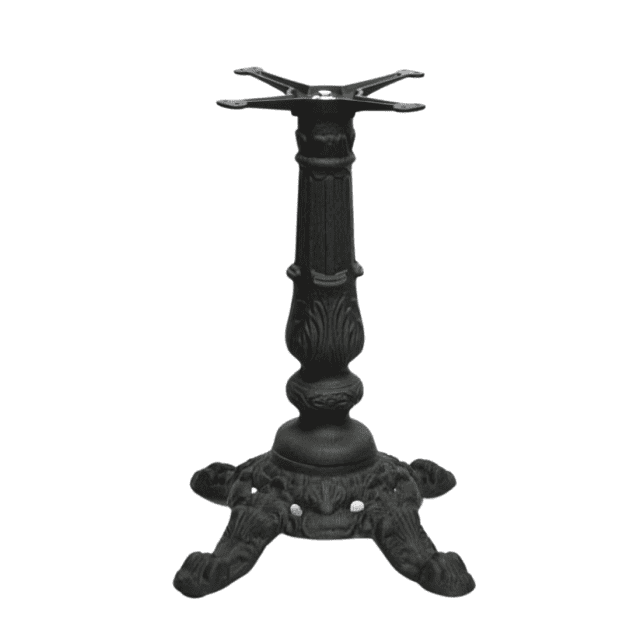
Cast iron and steel table bases solve stability in different ways. Cast iron offers mass and familiar commercial weight, while steel bases can reduce breakage risk and provide powder-coated black finishes for indoor and outdoor use when the finish is suitable.
STB steel bases are described with a three-screw assembly design that helps prevent loosening during use. That detail matters because repeated wobble often starts after installation, not on the first day a sample table is assembled.
Buyers should keep material and finish decisions tied to the actual dining zone. Chrome, black powder coating, and gray powder coating do not carry the same indoor or outdoor assumptions across every model.
- Confirm whether the finish is for indoor use, outdoor use, or both.
- Check whether bar height is available for the exact model.
- Ask whether the top plate may vary by table top.
- Keep replacement glides and assembly hardware tied to the model record.
Small checks that prevent repeat wobble
Repeat wobble usually means the first correction addressed the symptom rather than the cause. A useful maintenance routine checks the top screws, level glides, floor contact, and base-to-top fit before replacing the whole table.
For multi-location buyers, table bases maintenance for busy restaurants also protects consistency because each venue can inspect the same points in the same order.
A receiving checklist should include a quick assembled-table test. Staff can press at several edges, rotate the table, and confirm that the table returns to stillness without a repeated rocking motion.
Summary for wholesale stability decisions
A heavy-looking base is only one part of a stable restaurant table. Buyers reduce wobble by matching the base footprint to the top, separating dining and bar-height uses, verifying glides, and keeping assembly checks in the receiving routine.
If your project includes mixed floor surfaces, long rectangular tops, or repeat replacements, confirm the right base setup with us before standardizing the order.
FAQ
Why does a heavy restaurant table still wobble
A heavy table can wobble when the base footprint is too small, the top is off center, the fasteners loosen, or the floor contact points do not sit evenly.
Do adjustable glides solve restaurant table wobble
Adjustable glides help with small floor differences, but they cannot correct the wrong base size, poor top mounting, or a table top that overhangs too far.
Are steel table bases more stable than cast iron bases
Steel and cast iron bases can both be stable when specified correctly. The better choice depends on footprint, finish, breakage concerns, application, and the top size.
How often should restaurants check table bases
Busy restaurants should check glides, screws, and top alignment during routine maintenance, especially after floor cleaning, layout changes, or table relocation.
What should buyers confirm before bulk ordering bases
Buyers should confirm top size, base shape, height, finish, top plate, glide details, assembly hardware, and whether the model suits the venue layout.
The post Why Restaurant Tables Wobble in Busy Venues appeared first on FLYGOAT.
]]>The post Restaurant Table Tops and Bases Solutions appeared first on FLYGOAT.
]]>
Restaurant tables fail as a system, not as isolated parts. A beautiful top can wobble on the wrong base, while a strong base can look wrong or feel cramped under the wrong top. Wholesale buyers need a practical way to plan table tops and bases together so dining rooms feel stable, coordinated, and easy to replenish.
A Table System Starts With the Dining Layout
Commercial table tops and bases should be planned around how guests sit, how servers move, and how often the furniture will be reset. The same table size can behave differently in a booth row, an open dining room, a bar-height zone, or an outdoor patio.
A wholesale program should define every table position before matching products. The buyer can then separate compact two-top needs from long rectangular group tables, cafe-height tables, and bar-height seating. This keeps the order practical instead of turning the furniture list into a collection of attractive but mismatched pieces.
Layout information to collect
- Tabletop shape, size, thickness, and material.
- Dining height or bar height by area.
- Seating count and chair clearance around each table.
- Indoor, outdoor, cafe, bar, restaurant, or hospitality setting.
- Replacement strategy for future locations or repeat orders.

Birch Tops Need the Right Base Match
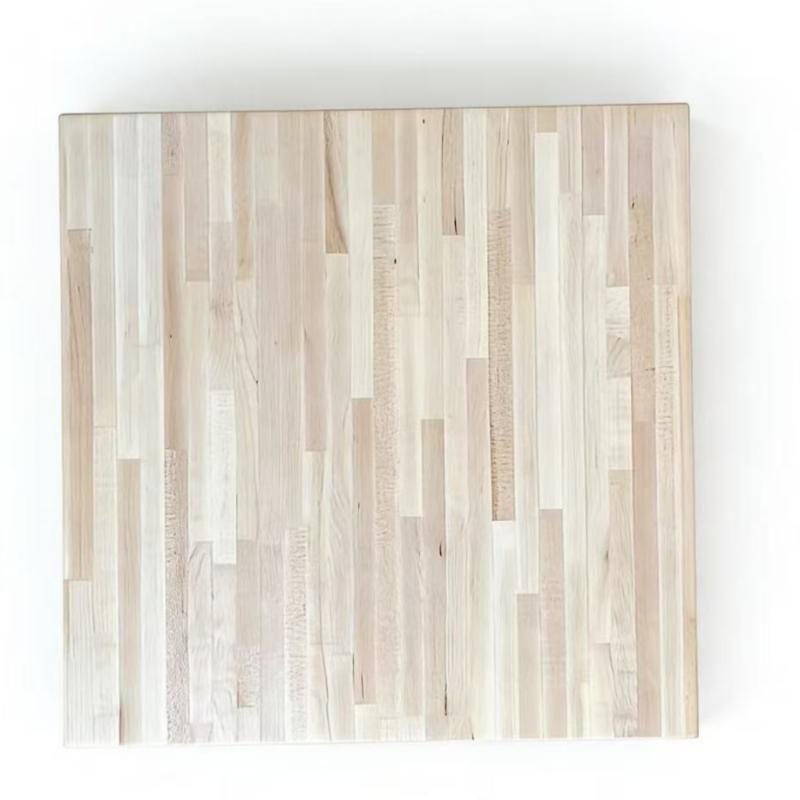
Fly Goat table tops are birch wood tops that can be customized for restaurant projects. Birch gives buyers a warm commercial surface, but the base still has to fit the top size, mounting method, and floor condition. Treating the top and base as one specification reduces wobble, uneven installation, and late-stage substitution.
A program that includes restaurant furniture table tops should pair each top with a confirmed base footprint. Round and square tops often work with round, cross, or prong bases, while long rectangular tops may need T bases or paired supports. If the top thickness changes, the buyer should reconfirm finished table height before production.
The top decision should also include how the restaurant will clean and move the table. A surface that looks right in a sample room may face heavier wiping, stacked chairs, wet floors, and frequent repositioning after opening. When buyers discuss those details before production, the selected top and base can support the actual service rhythm instead of only the drawing.
Guest comfort is the useful test for base geometry. A base that technically supports the top can still feel wrong if feet block chairs, columns sit too close to knees, or a booth table cannot be entered comfortably. For wholesale projects, the best approval sample is not only stable on the floor; it also allows real seating and service movement around it.
This record discipline also supports future design changes. If a new location needs a darker finish, different chair spacing, or more outdoor seating, the buyer can adjust one part of the table system while preserving the approved dimensions that already worked.
Common pairing logic
| Top format | Base direction | Wholesale check |
| Small square or round top | Round, cross, or prong base | Confirm diameter or cross footprint |
| Medium rectangular top | Cross base or T base | Check leg clearance and top plate position |
| Long rectangular top | Paired T bases or double T base | Specify quantity and spacing per table |
| Outdoor table | Black powder-coated steel option where suitable | Keep chrome and outdoor-use finishes separate |
| Bar-height table | Base family with 40 inch height option | Confirm final height with top thickness |
Base Geometry Protects Guest Comfort
A stable table still has to be comfortable. Cross and prong bases can provide strong support, but their feet may affect guest foot space if the table is narrow or the seating is tight. T bases can work well for rectangular booth tables because the support sits closer to the ends rather than under every chair position.
Fly Goat base references give buyers model-level guardrails. OM222 T bases can be used in pairs for longer rectangular tops, B17R and B22R round bases fit common compact table sizes, and B3030 cross bases can support larger square or round tops. These model examples help purchasing teams avoid treating all restaurant tables and bases as interchangeable.
Wholesale Consistency Matters After Opening
Wholesale Fly Goat restaurant tables and bases programs should also consider replenishment. Restaurants often reorder after a new location opens, after a remodel, or when a damaged top needs replacement. If the first order records only general descriptions, the second order may not match the original height, finish, or base footprint.
Fly Goat serves restaurant, cafe, bar, hotel, and hospitality buyers with table bases, table tops, and chairs, supported by a supply chain built around iron components, cast iron, stamped steel bases, and customized birch tops. For buyers ordering two or three containers at a time, the value is in repeatable product records as much as in the first shipment.
Records to keep with each table set
- Top size, edge, finish, and thickness.
- Base model, finish, height, and column size.
- Top-plate or mounting detail used for approval.
- Room area, seating count, and replacement priority.
- Photo record of the approved complete sample.
A complete table record also protects the buyer when several locations are being furnished in stages. The first location may approve a birch top with a black steel base, while the next location may need the same visual language with a different floor condition or table spacing. Clear records let the team adjust the base choice without losing the approved appearance.
This is especially useful for restaurant groups that reorder after seeing how guests use the space. A buyer can keep successful table sets intact, change only the weak point, and avoid starting the sourcing process over for every remodel.
A Practical Summary for Complete Table Planning
The best table program treats the top, base, chair clearance, floor condition, and future reorder path as one decision. Buyers who plan the system early reduce field fixes and make container orders easier to repeat across restaurants, cafes, and hospitality spaces.
For coordinated table-top and base planning, contact us with your layout, table sizes, and order quantity.
FAQ
Should buyers choose table tops or bases first?
Buyers should define the dining layout and tabletop sizes first, then choose bases that support those tops while preserving guest clearance and finished height.
Are birch table tops suitable for restaurants?
Birch table tops can be suitable for restaurant projects when the finish, edge detail, base match, cleaning routine, and replacement plan are specified for commercial use.
What base works best for long restaurant tables?
Long rectangular tables often need paired T bases or a double T-base solution. The exact choice should follow the top length, width, weight, and seating layout.
Can one order include table tops, bases, and chairs?
A coordinated wholesale order can include table tops, bases, and chairs when the buyer records the table set as a complete dining system rather than separate product lines.
What causes table-top and base mismatch?
Mismatch usually comes from incomplete size records, unclear mounting details, wrong base count for long tops, finish confusion, or changes in top thickness that alter finished height.
The post Restaurant Table Tops and Bases Solutions appeared first on FLYGOAT.
]]>The post How to Mount a Wood Table Top on a Metal Base appeared first on FLYGOAT.
]]>
Mounting a wood table top to a metal base is a small installation task with a large effect on guest comfort. If the base is off-center, the fasteners are weak, or the final table is not level, a good commercial table set can feel cheap after the first week of service. This guide gives wholesale and project teams a clear mounting path for restaurant use.
The Mounting Plan Begins With the Approved Table Set
A wood top should be mounted only after the top size, base model, finished height, and seating layout are confirmed. Restaurant teams often ask how to attach metal legs to a wood table top, but the better first question is whether the selected base is correctly matched to the top. A stable installation cannot rescue a mismatched table set.
Fly Goat supplies customizable birch table tops and multiple commercial base families, including T bases, round bases, cross bases, ornamental bases, prong bases, and steel outdoor-use options. That range helps buyers approve a complete set before installation, so the mounting crew is not deciding product compatibility on site.
Confirm these items before drilling
- Top size, top thickness, and underside finish condition.
- Base model, top plate, column size, and height.
- Final table position and seating clearance.
- Hardware length that will not break through the top.
- Whether the table is dining height or bar height.

Centering and Marking Keep the Table Usable
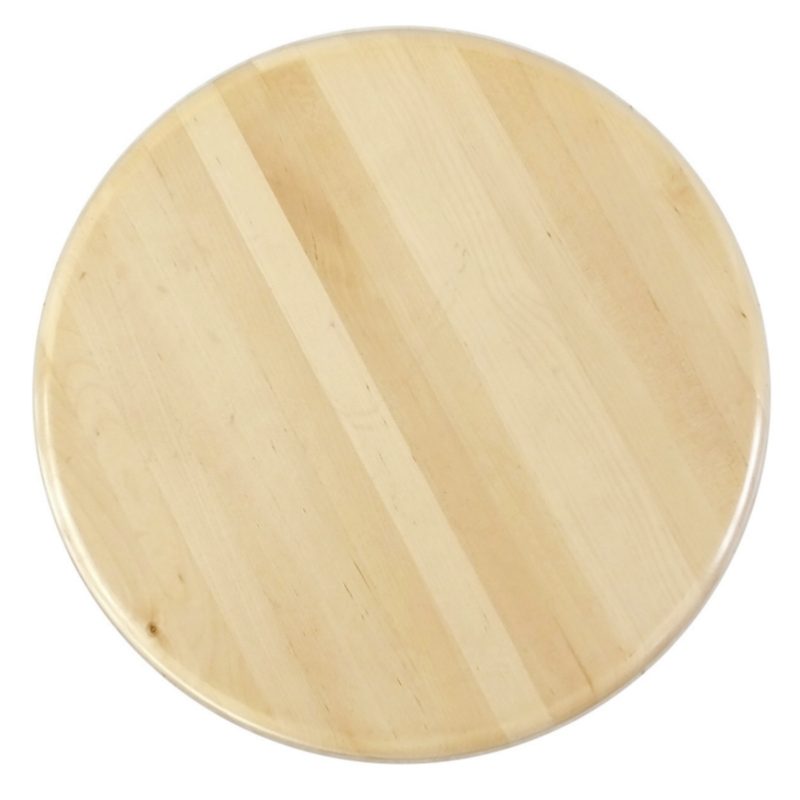
Professional table top mounting starts with careful positioning. Place the wood top upside down on a protected surface, set the metal base or top plate in position, and measure from several edges instead of trusting the eye. The goal is not only visual centering; the base must also support the seating pattern and prevent tipping at the table edges.
For rectangular tops, the base position may need to follow the seating layout rather than the exact geometric center. A paired T-base setup, for example, supports the ends of a long top and keeps the middle area open. For round or square tops, a centered round, cross, or prong base usually makes the most sense when the recommended top-size range matches the product.
A simple marking sequence
- Protect the finished top surface before turning it over.
- Mark the centerline or paired-base spacing with removable pencil marks.
- Align the top plate and confirm guest clearance from the planned seat positions.
- Mark every screw hole before moving the base.
- Check hardware depth against the wood thickness before drilling pilot holes.
Pilot Holes and Hardware Reduce Splitting
Wood tops should not be forced together with oversized fasteners or rushed drilling. Pilot holes help guide the screw, reduce splitting risk, and improve consistency across a batch of restaurant tables. The pilot depth should match the fastener plan without cutting through the visible top surface.
Teams that need to attach table top to base should also keep hardware consistent across the order. Mixed screw lengths, mismatched washers, and unrecorded substitutions can create uneven pull, loose plates, or avoidable service calls. A sample table should be mounted first, inspected, and approved before the crew repeats the process across the full shipment.
Hardware control matters because a restaurant order is usually installed in multiples, not as one isolated table. The approved screw length, washer choice, pilot-hole depth, and tightening method should be kept together for the whole batch. When crews improvise from table to table, the visible tops may look identical while the underside connections age differently.
A short recheck after the first service period is also useful for commercial spaces. Staff can confirm whether any fasteners loosened, whether glides need adjustment after floor cleaning, and whether the table still returns to level after being moved. That small review helps buyers improve the next installation batch without changing the full specification.
| Step | Purpose | QC check |
| Protect and invert top | Avoid finish scratches | Surface is cushioned and clean |
| Mark base position | Keep support and seating aligned | Measurements match approved sample |
| Drill pilot holes | Guide screws and reduce splitting | Depth does not break through top |
| Fasten plate evenly | Prevent twist and loose corners | Screws seat firmly without over-driving |
| Level final table | Improve guest comfort | Glides adjusted and table does not rock |
Leveling and Recheck Finish the Installation
The final table should be checked upright on the same type of floor where it will be used. Adjustable level glides can help correct small floor variations, especially in busy dining rooms where a slight wobble quickly becomes a guest complaint. For outdoor black steel bases, the placement and finish exposure should be checked separately from indoor tables.
A receiving or installation team should record the final table set after the first approved installation. The record should include top size, base model, fastener choice, finished height, and a photo of the underside mounting pattern. That record makes future replacement and repeat orders much easier.
Common mounting mistakes
- Using a base that is too small for the top.
- Skipping pilot holes in solid wood or birch tops.
- Over-driving screws and weakening the underside connection.
- Ignoring finished table height after changing top thickness.
- Mounting the base before confirming leg clearance.
For multi-table installations, the crew should treat the approved first table as the control sample. The same measurements, hardware, and tightening sequence can then be repeated across the batch, while any field change is recorded before more tables are assembled.
A Practical Summary for Project Teams
A secure installation comes from a correctly matched table set, accurate marking, pilot holes, consistent hardware, and final leveling. When the first sample table is approved and documented, the rest of the batch can be installed with far fewer surprises.
For custom birch tops and compatible restaurant table bases, review Fly Goat wood table top mounting guidance and contact us with your top sizes, base models, and project quantity.
FAQ
Do wood table tops need pilot holes before mounting?
Pilot holes are strongly recommended because they guide the screw, reduce splitting risk, and make repeated installation more consistent across multiple restaurant tables.
How do buyers choose screw length for a wood top?
The screw must hold the top plate securely without breaking through the visible top surface. Buyers should confirm hardware depth against the actual top thickness.
Should a metal base be centered under every top?
Centered placement works for many round and square tops, but long rectangular tops may need paired T bases placed near the ends according to the approved layout.
What causes a newly mounted table to wobble?
Wobble can come from a mismatched base, uneven fastening, weak floor contact, missing glide adjustment, or a top that is too large for the selected base.
Can mounting records help future wholesale orders?
Yes. A clear record of top size, base model, fasteners, finished height, and approved mounting photos helps the next order match the original table set.
The post How to Mount a Wood Table Top on a Metal Base appeared first on FLYGOAT.
]]>The post Commercial Restaurant Table Bases Buying Guide appeared first on FLYGOAT.
]]>
Bulk table-base buying often feels settled on paper, then gets tested by servers, chairs, mops, uneven floors, and guests leaning on the edge of a table. Before a container order makes sense, a buyer has to connect table size, traffic flow, finish durability, and shipment consistency. This guide gives wholesale restaurant furniture buyers a practical way to specify stable, repeatable, commercial-ready orders.
The Buying Decision Behind a Stable Dining Room
Restaurant projects need bases that survive repeated seating turns, cleaning routines, and the occasional hard bump from the side. For buyers comparing commercial restaurant table bases, stability is not one label on a catalog page. It comes from the relationship between footprint, column strength, top weight, glide adjustment, and careful installation.
A wholesale order works better when the dining layout leads the choice. Small two-top tables, long rectangular booths, bar-height counters, and outdoor patio tables all load the base differently. Once those zones are named, the buyer can compare product families without overbuying weight or choosing an attractive base that will struggle under the intended top.
What buyers should define first
*Tabletop shape and size for each dining zone.
*Finished table height, including top thickness and base height.
*Indoor, outdoor, bar, cafe, or hotel-use environment.
*Floor condition and whether level glides are needed.
*Finish preference, such as black powder coating, gray, chrome, or ornamental cast iron.

Materials and Base Families Change the Risk Profile
Commercial buyers usually compare cast iron, stamped steel, and other steel bases because each material handles a different concern. Cast iron brings useful mass and a familiar indoor restaurant look, while steel options can provide a smoother finish and strong breakage resistance in busy rooms. Chrome finishes should be kept separate from black outdoor powder-coated options because finish choice changes the proper use environment.
A mixed restaurant program may need booth rows, two-top dining tables, cafe corners, and a few fixed bar positions in the same shipment. Fly Goat offers T bases, round bases, cross bases, ornamental bases, prong bases, bolt-down bases, and selected outdoor black steel base options for restaurant and cafe projects. The practical value is the ability to match base geometry to table size, dining style, and later replenishment.
| Base family | Useful project fit | Buyer check |
| T base | Rectangular tops, booth rows, paired long tables | Confirm single or paired base use for the top length |
| Round base | Square or round two-top and four-top dining tables | Check diameter and column size against top weight |
| Cross base | General dining rooms and larger square tops | Match cross footprint to guest leg clearance |
| Prong base | Traditional dining layouts and ornamental styles | Confirm recommended top size for three- or four-prong models |
| Bolt-down base | Fixed-position bar or public-use seating | Confirm floor anchoring requirements before ordering |
Sizing Details Prevent Expensive Returns
A table base can be heavy and still feel wrong when the footprint does not suit the top. Fly Goat model references include B17R for 24 inch square, 24 by 30 inch, 30 inch square, 24 inch round, and 30 inch round tops. B22R moves into larger formats, including 24 by 42 inch, 30 by 42 inch, 30 by 48 inch, 36 inch square, 36 inch round, and 42 inch round tops.
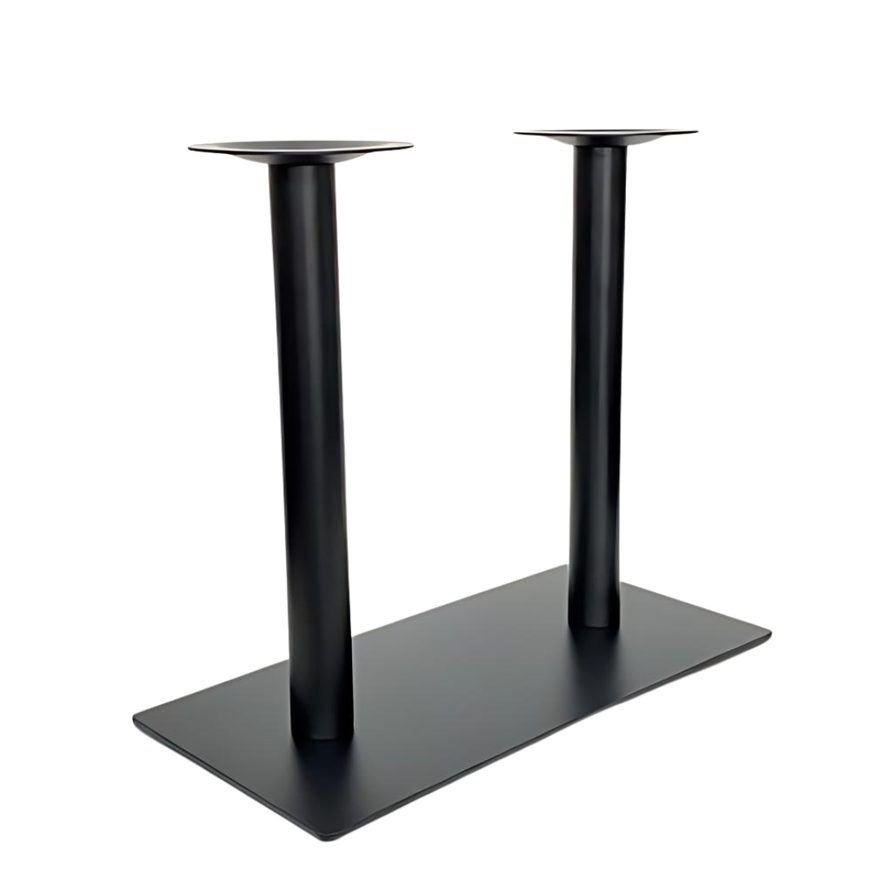
Long rectangular tops deserve an extra count check because many layouts need paired bases. Cast iron T-base models such as OM222 are used in pairs for 30 by 48 inch, 30 by 60 inch, and 30 by 72 inch tops. Putting that pairing rule into the purchase specification prevents a frustrating receiving-day problem: the shipment is complete, but the installation team is short on usable support points.
Height and top-plate checks
Finished height should include the base, column, top thickness, and any glide adjustment. Several Fly Goat table bases are available in standard 28 inch dining height and 40 inch bar height, although some models limit column size or bar-height availability. Buyers should also confirm the top plate, especially when matching wood tops with outdoor steel bases or custom table tops.
Supplier Evaluation Should Stay Product-Specific
A reliable Fly Goat restaurant table bases supplier should help buyers keep model evidence tied to the exact base being ordered. Ask for model names, recommended top sizes, finish limits, and assembly notes rather than a broad assurance that every base is heavy duty. That discipline matters when cast iron, steel, chrome, and outdoor-use items appear in one program.
Fly Goat grew from a family-owned Suzhou factory established in 1999 and now serves North American and European restaurant furniture markets through a supply chain focused on iron components, cast iron, stamped steel bases, chairs, and table tops. For wholesale buyers, that background is useful when the order depends on consistent production, container-level coordination, and repeat replenishment.
Commercial fields to include in the RFQ
*Exact model number and finish for each dining zone.
*Top size, top material, and top thickness to be mounted.
*Dining height or bar height requirement.
*Indoor or outdoor placement, especially for black powder-coated steel bases.
*Container quantity, packing expectations, and replacement continuity.
A final approval sheet should also separate what is fixed from what can change. Model number, top-size range, finish, height, and paired-base quantity should stay fixed once the sample is approved, while delivery schedule or branch-by-branch quantities can remain adjustable. This prevents a late purchasing change from accidentally changing the support system that the dining room already accepted.
A Practical Summary for Wholesale Buyers
The strongest buying decision connects dining layout, tabletop format, material, finish, and installation method before price comparison begins. When buyers use a table bases procurement guide in that order, they reduce wobble complaints, mismatched base counts, finish confusion, and delayed openings.
For restaurant, bar, cafe, or hospitality projects that need repeatable container orders, contact us with table sizes, finish needs, and project quantity.
FAQ
What makes a restaurant table base commercial grade?
A commercial-grade base should match the tabletop size, provide enough footprint and column strength, use a finish suitable for the setting, and tolerate repeated daily use in restaurants, cafes, bars, or hotels.
Are cast iron or steel table bases better for restaurants?
Cast iron is useful for mass and traditional indoor stability, while steel bases can offer strong breakage resistance and smooth finishes. The better choice depends on table size, placement, finish, and expected traffic.
Do long rectangular tops need two table bases?
Many long rectangular tops perform better with paired T bases. Product-specific guidance should confirm whether one base or two bases are needed before the order quantity is locked.
Can black steel table bases be used outdoors?
Some black powder-coated steel bases are suitable for indoor and outdoor use, but chrome finishes and model-specific limitations should be checked before placing an order.
What information should buyers send before ordering table bases wholesale?
Buyers should send table sizes, top material, height requirement, base style, finish, quantity, project timeline, and whether the furniture will be used indoors or outdoors.
The post Commercial Restaurant Table Bases Buying Guide appeared first on FLYGOAT.
]]>The post T-Base Table Bases for Rectangular Restaurant Tables appeared first on FLYGOAT.
]]>
Rectangular restaurant tables need a different base decision from small square or round tops. The support has to follow a longer span, keep legroom open on both sides, and survive frequent dining-room changes. For wholesale buyers serving restaurants, bars, cafes, or hospitality projects, T-base selection is about matching length, height, finish, and approval records before bulk ordering.
Why Rectangular Tables Need T-Base Logic
A rectangular top usually shows weakness at the ends, not only at the center. Guests lean on corners, servers push tables together, and floors vary across a long dining area. A single center pedestal may leave too much unsupported span for a long top.
A T-base spreads support along the table length while keeping the central seating zone clear. Current search results around long restaurant tables focus on the same practical issue: which base style supports rectangular tops without blocking chairs. That makes T-base table bases wholesale a useful query for buyers comparing end-base and commercial stability options.
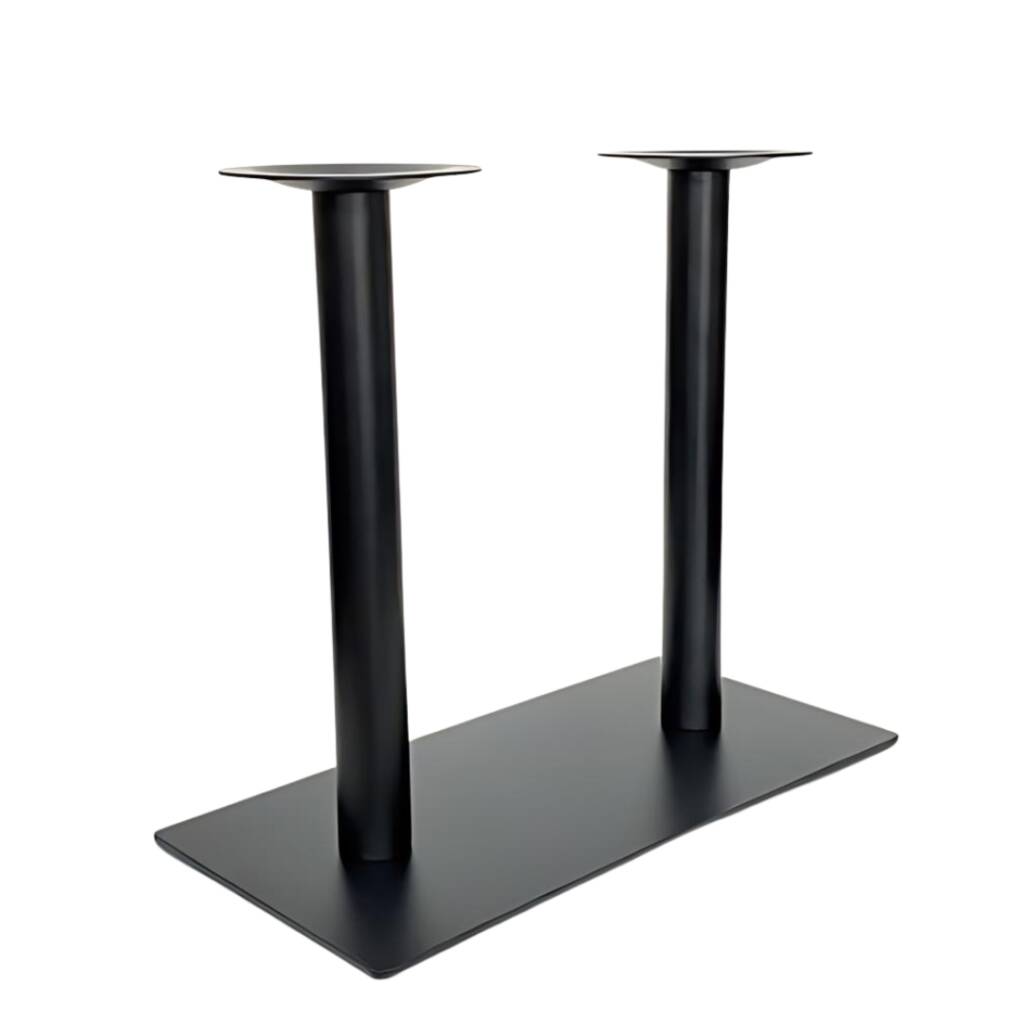
T-Base Models That Fit Long Restaurant Layouts
Model evidence matters because T-base names are used loosely. A buyer should confirm whether a quote refers to cast iron, black steel, a single T-base used in pairs, or a double T-base for longer spans. Fly Goat lists several table-base options that separate those scopes.
OM222 cast iron T-base
The OM222 Commercial Grade Restaurant T-Base is a heavy-duty cast iron T-base at 28 inches high. It is specified for use as two bases under 30 x 48 inch, 30 x 60 inch, and 30 x 72 inch tops, with an available 40-inch bar-height option. This makes it relevant for a rectangular restaurant table base that should avoid a bulky center pedestal.
STB522 black steel T-base
The STB522 black steel T-base suits buyers who prefer steel construction and a black commercial finish. It is listed with an available 40-inch bar height, black powder coating for indoor and outdoor use, a smooth finish, three-screw assembly, and 1.5-inch round level glides. For T-base table bases for restaurants, these details should be confirmed by model.
| Model / family | Supported use | Buyer check |
| OM222 cast iron T-base | Two bases for 30 x 48, 30 x 60, and 30 x 72 inch rectangular tops; 28 inch height; available 40 inch bar height | Confirm paired-base layout and top size |
| STB522 black steel T-base | Available 40 inch bar height, black powder coating, three-screw assembly, and 1.5 inch round level glides | Confirm finish, use environment, and glide scope |
| B522 / B241L cast iron T-base family | Cast iron T-base options for rectangular commercial table planning | Do not transfer model-specific claims |
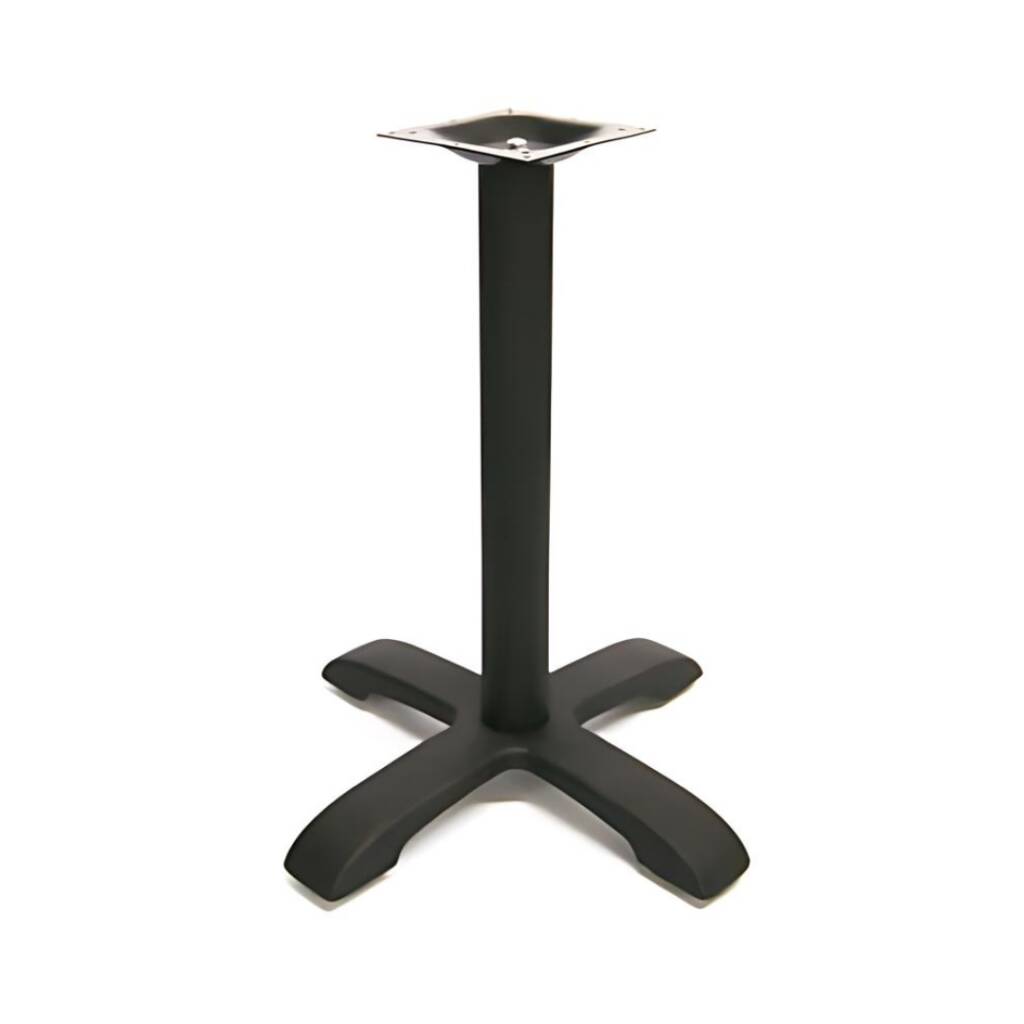
How to Specify T-Base Table Bases Wholesale
A wholesale specification should make the table layout visible before price comparison begins. The same unit price can represent different risk if one quote assumes single bases, another assumes paired bases, and a third uses a double T-base. This matters when tables, bases, and chairs are consolidated into container orders.
A practical RFQ for commercial table bases for rectangular layouts should include these checks:
- Top size, shape, material, and expected tabletop weight.
- Dining height or bar height, including finished tabletop height.
- Required finish, such as black powder-coated steel or cast iron.
- Paired end bases, a double T-base, or another base style.
- Floor conditions, chair clearance, and table movement frequency.
These fields keep the discussion tied to use rather than catalog labels. They also help the supplier check whether the requested restaurant table base matches the intended top instead of a similar-looking product from another family.
Where Other Base Styles Still Make Sense
T-bases are not the universal answer for every restaurant table. Cross bases can suit square and round tops where support needs to radiate from the center. Round bases can give small circular tables a clean look. Prong bases can improve foot clearance in compact layouts. Buyers should keep those families separate from T-base claims, because OM224, OM264, and OM324 are four-prong cast iron bases with their own recommended tabletop sizes, while OM222 is the T-base model for rectangular tops.
Layout Checks Before Approval
A base can be technically correct and still create layout problems after installation. Restaurants need chair pull-in space, aisle clearance, stable leveling, and a finished height that works with the tabletop. These details are easier to confirm on a sample than after a full shipment arrives.
Height and accessible seating
The 2010 ADA Standards treat dining surfaces as built-in elements when they are provided for food or drink. Accessible dining surfaces must have tops between 28 and 34 inches above the finished floor, with clear floor space plus knee and toe clearance. This does not make a table base a certified accessibility product, but it gives buyers a useful layout check when dining-height and bar-height tables are mixed.
Sample approval and receiving checks
A sample should confirm the base footprint, top plate, column size, finish, glide behavior, and assembled height with the intended tabletop. Receiving teams should keep model names separate because similar black bases can belong to cast iron, steel, cross, round, bolt-down, or T-base families.
Summary for Procurement Teams
T-base table selection is strongest when it begins with the rectangular tabletop, not with a generic table-base category. OM222 supports paired cast iron T-base use for listed rectangular sizes, while STB522 gives buyers a black steel T-base option with model-specific finish and assembly details. Other base styles remain useful, but they solve different layout problems.
For buyers comparing Fly Goat restaurant table base options, the next step is to confirm top size, height, material, finish, and sample approval scope before bulk ordering. For model-specific support, contact us with the intended table layout and quantity plan.
FAQ
Are T-base table bases only for rectangular tables?
T-base table bases are most useful for rectangular and longer table tops because their support follows the table length. Small round or square tops may fit other base styles better.
Should a restaurant use one T-base or two T-bases?
Long rectangular tops often use paired end bases so support reaches both ends. The arrangement should follow the model recommendation, tabletop size, and seating plan.
What keyword should buyers use when sourcing this product?
Buyers can search for t-base table bases wholesale, then narrow the RFQ by material, model, finish, height, and rectangular tabletop size.
Can T-bases work for bar-height restaurant tables?
Some Fly Goat T-base models list an available 40-inch bar-height option. Buyers should confirm finished table height with the selected tabletop.
What is the biggest mistake in ordering restaurant table bases?
The biggest mistake is treating all commercial table bases as interchangeable. Shape, material, height, top plate, glides, and tabletop range must match the exact model.
The post T-Base Table Bases for Rectangular Restaurant Tables appeared first on FLYGOAT.
]]>The post 3-Prong vs 4-Prong Restaurant Table Bases appeared first on FLYGOAT.
]]>
The base under a restaurant table has to do more than carry the top. It has to keep chairs moving, preserve guest clearance, suit the top shape, and stay visually quiet through daily service. For wholesalers comparing commercial table bases, the key question is often whether a three-prong or four-prong footprint gives better support and floor space.
The footprint changes the table’s behavior
Prong count affects where the support reaches under the top. A three-prong base creates a triangular footprint, while a four-prong base distributes support across four directions. Top shape, seating pattern, and floor area decide which one fits.
Three-prong layouts
Three-prong table bases can suit round tops and compact dining positions where a triangular footprint gives practical reach without filling every corner. The open gaps can also make the base feel less visually heavy.
Four-prong layouts
Four-prong table bases are often easier to align with square or larger round tops because the footprint follows four directional points. A 4-prong table base restaurant buyer can use that layout when support needs to track the corners or the broader perimeter.
- Match the prong pattern to the tabletop shape before comparing finish or style.
- Check chair pull-out space at every intended seat, not only at the front of the display sample.
- Confirm whether the base is for a 28-inch dining height or a 40-inch bar height.
- Keep the selected model and tabletop size together in the quotation record.
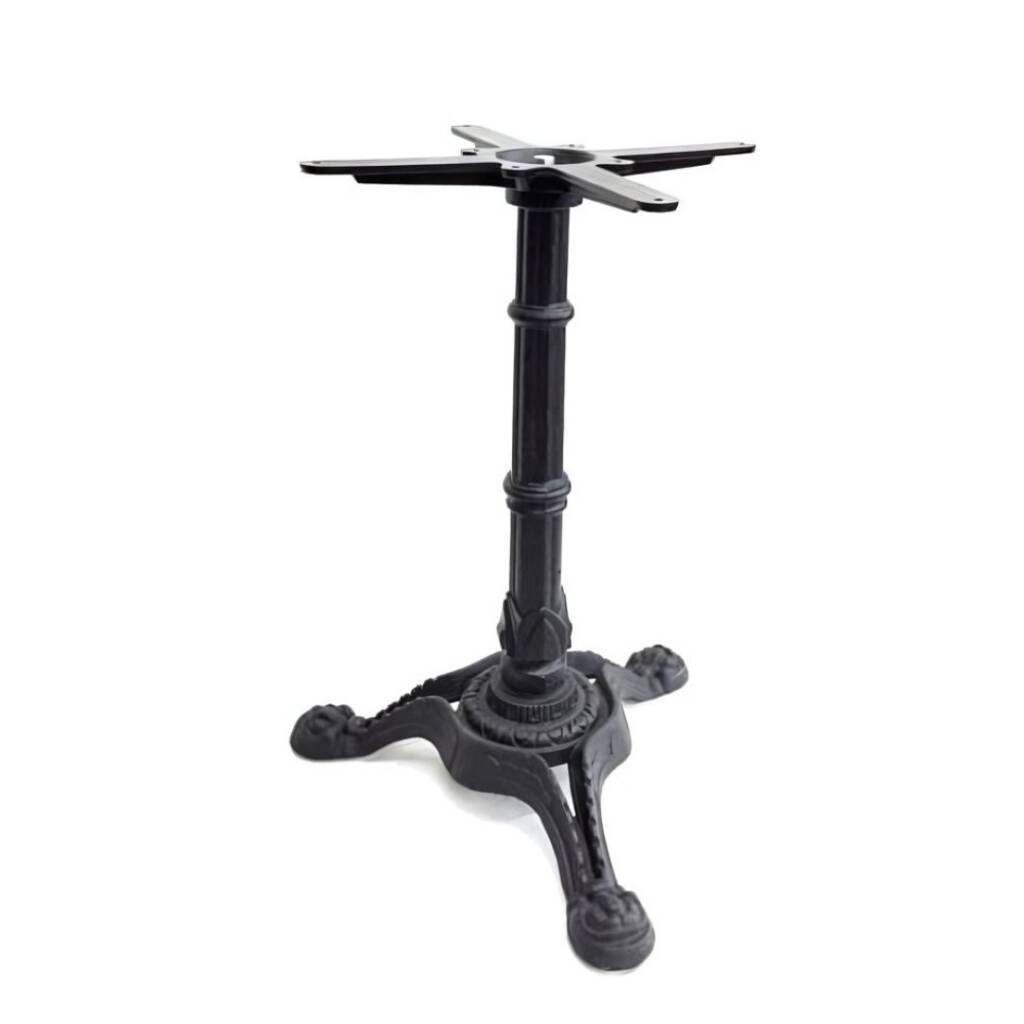
Matching prong count to tabletop size
Tabletop size is the first practical filter for a buyer comparing a 3-prong table base with a four-prong alternative. The footprint must support the top without crowding the edge, chairs, or servers.
Fly Goat’s 3-prong table bases include OM223, a heavy-duty cast-iron model at 28 inches high for 24- to 30-inch round tops, and OM263, a 28-inch model for 36- to 42-inch round tops. These ranges give buyers a clearer starting point than appearance alone.
The four-prong OM224 is recommended for 24 x 24 inch through 30 x 30 inch tops. OM264 is recommended for 36 x 36 inch through 30 x 48 inch tops, while OM324 uses a 4-inch round column for a 48-inch round top. All three are heavy-duty cast-iron bases at 28 inches high.
| Product family | Supported top range in the project data | Useful buying situation |
| OM223 three-prong | 24- to 30-inch round tops | Compact round two- and three-seat layouts |
| OM263 three-prong | 36- to 42-inch round tops | Larger round dining tops |
| OM224 four-prong | 24 x 24 to 30 x 30 inches | Square tops and compact footprint planning |
| OM264 four-prong | 36 x 36 to 30 x 48 inches | Larger square or rectangular tops |
| OM324 four-prong | 48-inch round top | Broad round tops needing a wider four-point layout |
The table is a starting point, not a substitute for a complete sample review. Top weight, overhang, and fixing details can change the final recommendation.
Clearance matters as much as stability
Restaurant table base selection is partly a movement problem. A stable base can still be wrong if its prongs meet chair legs, block an approach, or slow servers at the table.
Check the guest side
Place the intended chair at every seating position and pull it back as a guest would. Watch the chair legs, the base prongs, and the path to the next table. This simple mock-up reveals conflicts that a top-down product image cannot show.
Check the service side
Servers need a clean route around table edges, especially in narrow aisles and bar-adjacent dining areas. A four-prong layout may offer useful support for a broad top, but the extra direction of the footprint should still be checked against the room’s traffic pattern.
For distributors building a repeatable assortment, this is where a cross table bases supplier can add practical value: buyers can compare models against the same top sizes and seating layouts instead of treating each project as a one-off style decision.
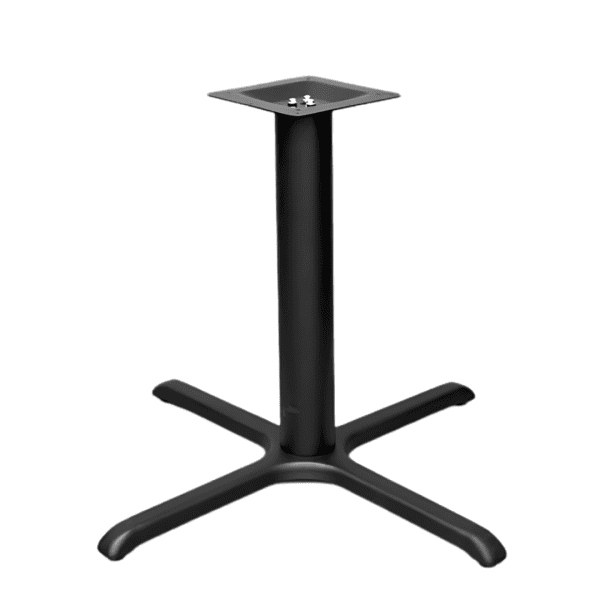
Material and height still need model-level confirmation
Prong count does not replace model-level specification. The OM223, OM263, OM224, OM264, and OM324 examples are heavy-duty cast-iron commercial table bases, but buyers should still confirm the exact height, column size, top plate, and finish for the selected model.
The listed dining height for these ornamental families is 28 inches, with bar-height availability at 40 inches. That distinction matters when a wholesaler prepares mixed restaurant and bar assortments. A 28-inch base is not interchangeable with a bar-height base simply because both share the same prong pattern.
The useful comparison is the model, top range, height, and room use before the order is finalized.
A practical approval record reduces rework
The safest purchase record connects one base model to one tabletop plan. It should capture:
- exact model and prong count;
- tabletop shape, dimensions, and expected overhang;
- dining or bar height;
- column and top-plate details;
- finish and application location;
- chair positions and any accessible seating position;
- approved sample photos and assembly notes.
This record also helps with replacement orders. When a restaurant group adds a location, the buyer can see why one model was used for a compact round table and another for a broad square or rectangular top. That continuity is more useful than a vague instruction to order a “stable base.”
Summary
Three-prong bases suit compact or round dining tops, while four-prong bases can align more easily with square, larger round, and selected rectangular tops. The choice depends on the model’s stated top range, height, clearance, and seating layout.
For a wholesale order, compare prong pattern and tabletop size first, then confirm height, column, top plate, finish, and clearance.
For a project-specific comparison, send the tabletop sizes, seating plan, intended height, and preferred finish to Fly Goat so the selected restaurant table base can be reviewed against the actual application.
FAQ
Are three-prong bases stable enough for restaurants?
They can be appropriate when the model’s stated top range and the room layout match the application. Stability should be reviewed with the complete tabletop, overhang, chair positions, and floor condition rather than prong count alone.
When should a buyer use a four-prong base?
A four-prong base is worth considering when the top is square, broad, or needs support aligned across four directions. The exact model still has to match the tabletop size and height.
Can the same prong base be used for dining and bar tables?
Do not assume that. Confirm the model’s listed height and whether a 40-inch bar-height version is available. A 28-inch dining base and a 40-inch bar base serve different layouts.
Is cast iron better than steel for every table base?
No. Material should be evaluated at model level with the top size, handling needs, finish, and application. The models in this comparison are cast iron, but that does not make every cast-iron base interchangeable.
What should be included in a wholesale table-base inquiry?
Include the top shape and size, expected overhang, height, seating layout, finish, application location, and any preferred model family. These details let the supplier review the base as part of a complete table rather than as an isolated component.
The post 3-Prong vs 4-Prong Restaurant Table Bases appeared first on FLYGOAT.
]]>The post Birch Restaurant Table Tops: Care Guide for Busy Venues appeared first on FLYGOAT.
]]>
Restaurant operators do not judge a tabletop only by its first showroom photograph. They judge it after wipe-downs, hot plates, spills, chair impacts, and rushed closing shifts. For buyers sourcing restaurant table tops in volume, a birch surface can be practical when its cleaning routine, edge protection, and replacement plan are specified together.
Why Birch Needs an Operating Plan
Birch gives a restaurant a light grain, but every wood surface still depends on its protective finish and daily handling. The question is whether the top can remain clean, stable, and visually consistent under the venue’s actual routine.
Match the Surface to the Shift
High-turnover dining rooms create predictable stress points. Servers place trays near the same edge, guests drag plates across service zones, and staff clean while the next seating arrives. A useful care plan names the cleaner, wiping method, spill response, and escalation point.
- Remove food and liquid promptly rather than allowing pooling at joints or edges.
- Use a soft cloth and an approved neutral cleaner; avoid abrasive pads and unapproved solvents.
- Dry the surface after wiping, especially around edge profiles and mounting points.
- Keep hot cookware on a suitable trivet or heat barrier unless the finish supplier approves direct contact.
- Record scratches, swelling, or finish changes so one damaged top does not become a whole-room replacement.
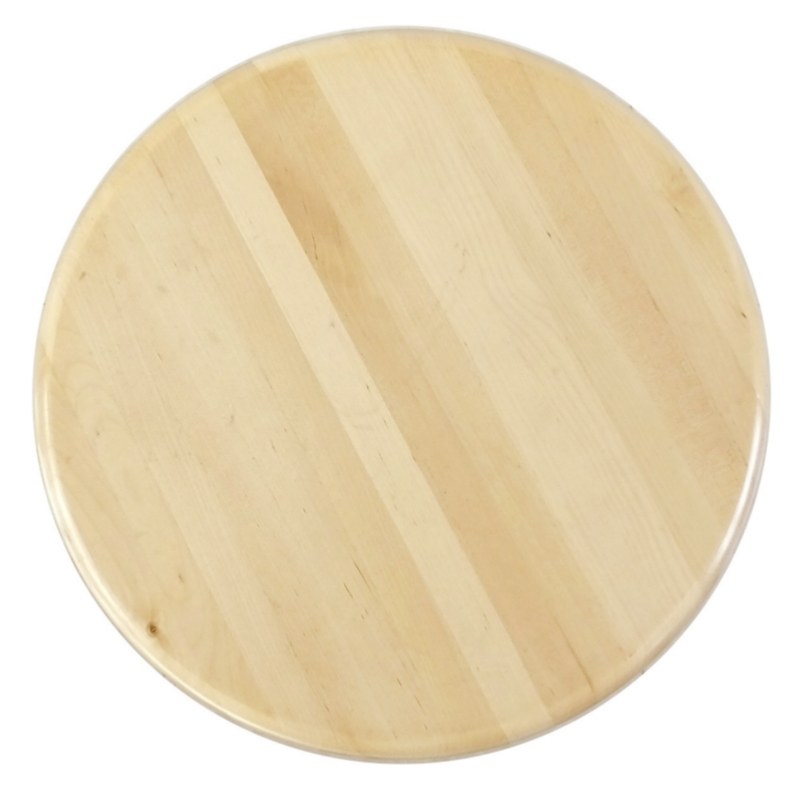
What Makes a Commercial Birch Top Easier to Maintain
Maintenance performance comes from decisions made before production. Buyers of restaurant wood table tops wholesale should request a finish sample, edge detail, mounting approach, and care sheet as one approval set. This aligns the delivered top with the venue’s cleaning chemicals and service temperature.
Review the Exposed Edges
Edges receive more impact than the centre of a tabletop. Ask how the edge is shaped, sealed, and protected at corners, cut-outs, and the underside. A clean edge reduces the chance that routine wiping leaves moisture trapped in a vulnerable transition.
Confirm the Mounting Interface
The tabletop and base work as one operating surface. A mounting plan should show the top-plate relationship, screw locations, tightening access, and cleaning clearance. The base family may vary by project, so approve the complete table sample rather than assume a familiar fixing pattern suits every custom birch top.
| Check before approval | Why it matters in service | Evidence to keep |
| Birch construction and finish sample | Sets the expected colour, grain, and cleanability | Signed sample or image record |
| Edge and corner treatment | Controls impact and moisture entry points | Drawing or approved sample |
| Base and fixing interface | Reduces wobble and hidden cleaning gaps | Assembly drawing |
| Cleaner and heat routine | Prevents avoidable finish damage | Venue care sheet |
| Replacement identification | Speeds like-for-like maintenance | Model and order reference |
Build a Cleaning Routine Staff Can Follow
A short routine is more reliable than a long policy. The daily instruction for wooden table tops for restaurants should fit on a closing checklist and distinguish ordinary wiping from incident response.
Daily Close
Staff should clear debris, wipe with the approved solution, and dry the top before stacking chairs or closing the room. The supervisor can then scan for raised edges, open seams, deep scratches, or stains that need attention before the next service.
Spill and Heat Response
Liquid should be blotted, not pushed across a broad area. A hot dish or pan should be moved onto a heat-safe barrier, and any visible finish mark should be logged with the time and location. Do not promise that a cleaner, polish, or repair will restore the original appearance until the finish maker confirms the method.
Weekly Condition Review
Once a week, compare high-use tables with a retained reference sample. Look for dull patches, edge wear, loosened fasteners, and recurring marks. This comparison helps a distributor or restaurant group separate a local handling problem from a broader batch issue.
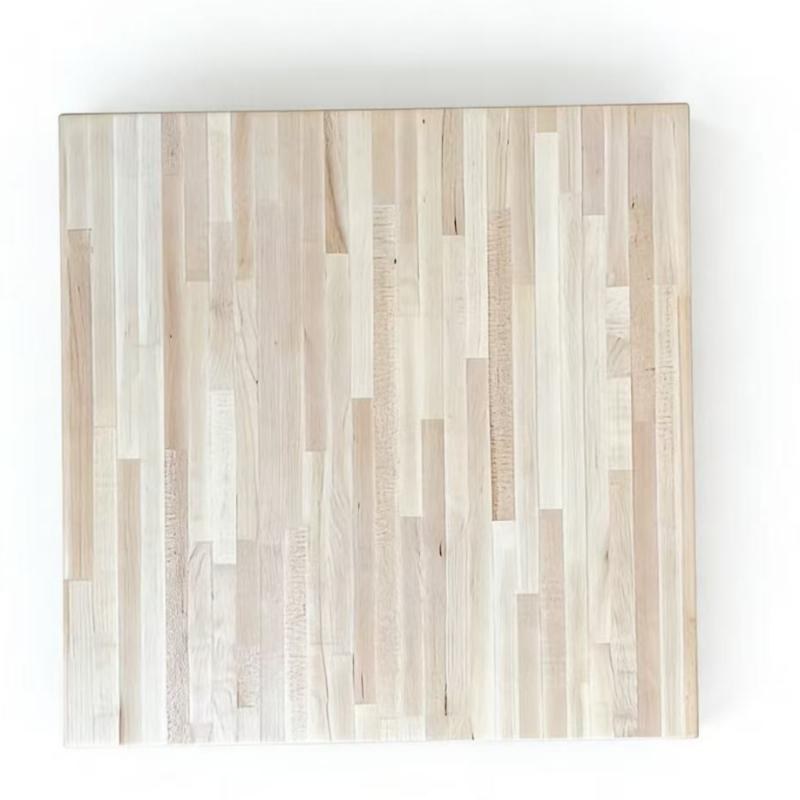
Plan Bulk Replacement Before the First Shipment
Replacement planning protects continuity when one top is damaged. Fly Goat offers customizable birch table tops, so a wholesale brief should preserve the approved shape, dimensions, edge treatment, finish reference, and mounting details for future repeats. To manage the same records across a project, use commercial table tops and bases as the category reference. The brand’s role is most useful when it helps the buyer keep those records consistent across a restaurant group or distributor assortment.
For each order, keep a compact record of:
- approved birch sample and finish reference;
- top shape, size, edge, and drilling information;
- paired base model and assembly notes;
- packing requirements and inspection photos;
- cleaning products approved for the delivered finish.
Practical Takeaway
Birch restaurant table tops can serve busy venues when buyers treat care as part of the specification. Approve the finish and edge, match the fixing plan to the base, write a shift-ready cleaning routine, and retain a replacement reference for every custom size. Fly Goat can use that approved reference to help wholesalers and restaurant groups keep later replacement discussions aligned without unsupported promises.
For a project-specific birch top and base combination, send Fly Goat the venue routine, top dimensions, finish expectations, and cleaning requirements through the commercial inquiry page so the final sample can be reviewed against the real operating conditions.
FAQ
Is birch suitable for restaurant table tops?
Birch can be suitable when its finish, edge treatment, mounting details, and cleaning routine are matched to the venue. It should be evaluated as a complete tabletop specification rather than by wood name alone.
What cleaner should staff use on a birch tabletop?
Use only the cleaner approved for the delivered finish. A soft cloth, prompt spill removal, and thorough drying are safer default practices than abrasive pads, harsh solvents, or unverified polishes.
How can buyers compare custom wood tops from different suppliers?
Compare the same sample fields: birch construction, finish, edge, dimensions, drilling, base interface, packing, inspection method, and replacement identification. Keep unsupported claims out of the comparison.
Do food-safety rules certify a tabletop material?
No. Food-safety rules describe hygienic use and cleanability requirements for applicable surfaces. They do not automatically certify a supplier’s birch top, finish, or complete table assembly.
What should a wholesale order record for future replacements?
Retain the approved sample or clear image, exact dimensions, edge and drilling details, finish reference, paired base, packing notes, and the approved cleaning instructions for that order.
The post Birch Restaurant Table Tops: Care Guide for Busy Venues appeared first on FLYGOAT.
]]>The post Black Metal Restaurant Chairs: Custom Seat Spec Guide appeared first on FLYGOAT.
]]>
A black frame gives a seating order visual consistency, but the seat option determines how well that order fits the venue. Wholesale buyers should specify more than a color: they need to separate the standard cushion, custom upholstery, and wood-seat paths, then lock the sample and evidence required before production. This guide turns that choice into a practical M5530 brief without borrowing claims from unrelated chair models.
Fix the Application Before the Seat Finish
Application is the first boundary because M5530 is an indoor chair. The model uses a black metal frame with black powder coating and comes with an original black cushion. That evidence supports restaurant and cafe dining-room use; it does not support an outdoor, patio, stacking, or weather-resistance claim. Buyers should therefore state the indoor zone and cleaning routine before discussing a new seat surface.
That boundary is especially useful for buyers comparing indoor restaurant metal chairs, because a familiar black finish does not make different models equivalent.
A focused brief also prevents a generic category request from replacing a model-level decision. The broader range of commercial metal chairs may contain different frames, finishes, or operating limits, so the M5530 order should carry its own approved configuration.
Map the chair to the dining program
The dining program should explain why the seat is changing. A standard black cushion supports a uniform black scheme, custom upholstery can carry a defined color or material reference, and a wood seat creates a different visual and maintenance profile. These are separate choices, not interchangeable descriptions of one finished chair.
Define the buyer’s non-negotiables
A concise internal brief should name the conditions that will decide approval:
- indoor restaurant or cafe zone and expected cleaning method;
- standard cushion, custom upholstery, or wood-seat path;
- approved color, texture, edge appearance, and visible stitching reference;
- required sample, test evidence, and receiving inspection method.
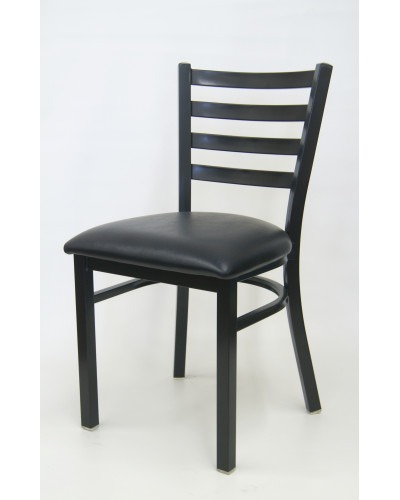
Compare the Three Supported Seat Paths
The seat path should be selected by operating need rather than by a vague preference for black metal restaurant chairs. M5530 supports the original black cushion, a custom upholstery seat, or a wood seat, while other details still require supplier confirmation.
| Seat path | Best use in the brief | Buyer must define | Approval evidence |
| Original black cushion | Consistent black seating program | Cleaning method and acceptable finish variation | Complete finished sample |
| Custom upholstery | Specified color, texture, or venue identity | Material reference, color standard, seam details, care target | Approved upholstery plus complete chair sample |
| Wood seat | Hard-surface look and a distinct care routine | Wood species, finish, color, edge profile | Finished wood seat installed on the chair |
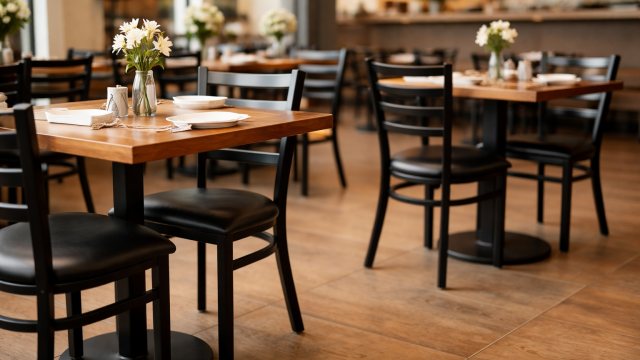
Turn Custom Upholstery Into a Quotation-Ready Brief
Custom upholstery becomes manageable when the request is tied to a physical reference and acceptance rules. A buyer should not rely on a color name such as charcoal or burgundy alone, because names do not define hue, grain, gloss, or batch tolerance. Once the venue need is clear, Fly Goat can review the M5530 seat path against the buyer’s reference package.
Lock material identity and appearance
The appearance package should identify the upholstery supplier or reference code when available, the face color, texture direction, seam placement, and acceptable edge treatment. If the material comes from the buyer, the brief should also state what quantity or sample size will be supplied for evaluation. Unsupported performance values should remain open confirmation fields rather than invented requirements.
Ask for evidence that matches the market
The evidence request should name the destination market and intended use before naming a standard. For European non-domestic seating projects, EN 16139:2025 is a current reference covering safety, strength, and durability requirements and test methods for adult non-domestic seating. Mentioning that standard does not mean M5530 is certified or compliant; buyers should request model- and configuration-specific evidence when the project requires it.
Approve a Complete Sample, Not a Loose Swatch
A loose swatch confirms only part of the decision. The production reference should be a complete chair that combines the M5530 frame, selected seat construction, upholstery or wood finish, visible seams, attachment method, and overall appearance. This approach lets the buyer evaluate the junctions that disappear when components are reviewed separately.
A controlled Fly Goat sample also gives the receiving team one physical reference for checking later deliveries.
Sample approval checklist
- Confirm the model name and indoor black powder-coated frame.
- Photograph the approved front, rear, side, underside, and seat details.
- Record the upholstery or wood reference and any approved variation limit.
- List the exact evidence reviewed and any items still pending confirmation.
- Keep one signed or otherwise controlled sample as the production reference.
Keep Receiving Checks Aligned With Approval
Receiving inspection should repeat the approval logic instead of introducing a new standard at the warehouse. Inspectors can verify the M5530 identity, indoor black frame finish, selected seat type, color and texture match, visible seam execution, surface condition, and consistency against the controlled sample. Functional or laboratory tests should be checked only when they were included in the agreed evidence plan.
A short defect-routing rule makes the inspection usable. Cosmetic variation should be compared with the approved limit; configuration errors should be isolated by model and seat path; and missing evidence should be recorded as an open documentation item. The same rule applies across metal frame restaurant chairs, but the acceptance sample and claims must remain model specific.
A Practical Buying Decision
The strongest M5530 order is a controlled seat program, not a broad request for metal chairs for restaurants. Buyers should first confirm indoor use, select one of the three supported seat paths, define appearance and care requirements, approve a complete sample, and request only the market-relevant evidence needed for that configuration. That sequence keeps customization useful without turning unsupported assumptions into purchase specifications.
For a repeat program, keep the Fly Goat model identity and the approved seat path together on every purchase and receiving record.
Send the M5530 quantity, indoor application, chosen seat path, material references, and evidence needs when you contact our team for a configuration review.
FAQ
What seat options are supported for M5530?
M5530 is available with its original black cushion, a custom upholstery seat, or a wood seat. Buyers should treat each as a separate configuration and approve the complete finished chair.
Are M5530 chairs intended for outdoor restaurant seating?
No outdoor claim is supported for this model. The verified configuration is an indoor black metal frame with black powder coating, so patio use requires a different product decision.
What should a custom upholstery brief include?
The brief should identify the material or reference code, color, texture, seam and edge details, cleaning target, complete-sample requirement, and any market-specific evidence requested by the project.
Can a buyer approve upholstery from a swatch alone?
A swatch is useful for material and color review, but it does not show the installed shape, seams, edges, attachment, or interaction with the frame. A complete chair sample is the stronger production reference.
Does citing EN 16139:2025 prove the chair complies?
No. The standard is a relevant non-domestic seating reference, but compliance must be supported by evidence for the exact model and configuration. This article does not claim M5530 certification.
The post Black Metal Restaurant Chairs: Custom Seat Spec Guide appeared first on FLYGOAT.
]]>